Organic Calendula Flowers: How to Brew a Golden Floral Tea
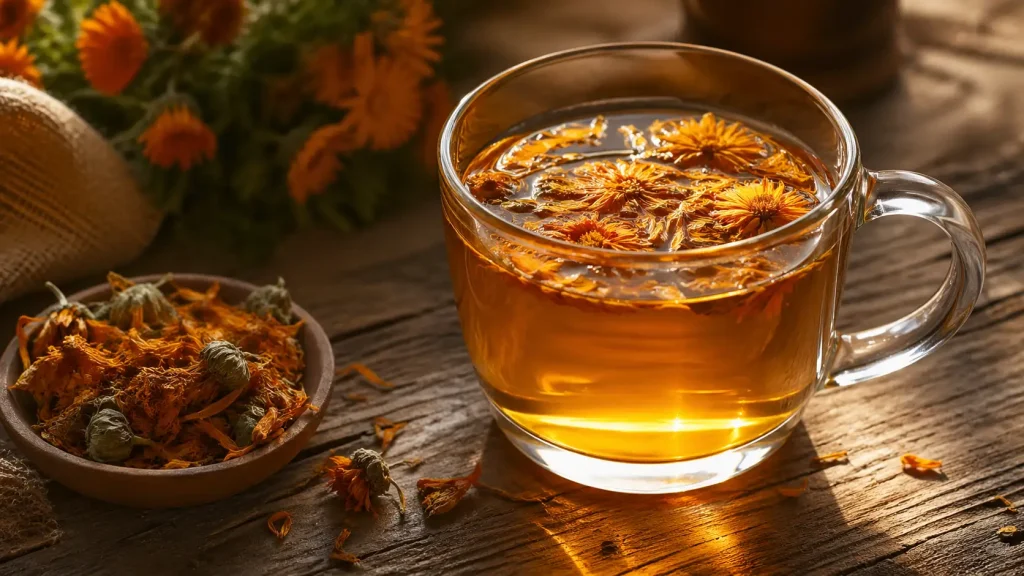
Crack open a bag of organic calendula flowers and the color alone earns their reputation. The petals range from deep amber to vivid saffron-orange, and they steep into one of the most visually striking cups in the floral tea category. Calendula (Calendula officinalis) has served kitchens, apothecaries, and dye pots across Europe and the Mediterranean for centuries. Culpeper noted its warming, brightening character in the 17th century. Medieval cooks stirred the petals into broths and custards as much for color as flavor. That culinary instinct was sound: calendula contributes a mildly bitter, slightly resinous, honey-edged flavor that rewards careful brewing.
This guide walks through everything a tea blender or home herbalist needs to brew organic calendula flowers well. You will find the exact measurements, water temperatures, and steep times that produce a balanced cup. You will also find pairing suggestions, blend ratios, a troubleshooting section for the problems that most often flatten the flavor, and storage guidance for keeping dried petals at their best. Whether you are developing a product formula or steeping your first solo cup, the approach is the same: start with quality material and give it the right conditions.
Why Organic Calendula Flowers Produce Such a Distinctive Cup
Most floral teas rely almost entirely on volatile aromatics for their appeal. Calendula works differently. The petals carry both aromatic compounds and a resinous fraction made up of triterpenoids and flavonoids. That resin fraction adds body and a subtle bitter finish that keeps the cup from tasting thin or one-dimensional. It also contributes the golden amber color that deepens visibly as the steep progresses.
The organic designation matters more here than with some other botanicals. Calendula petals have a sticky, slightly tacky surface texture from their resin content. That tackiness binds surface residues efficiently. Petals grown without synthetic pesticides protect the resin fraction you are actually brewing for, rather than introducing compounds that compete with or degrade the cup’s flavor integrity.
Petal quality varies considerably across the wholesale market. The best organic calendula flowers arrive whole or near-whole, deeply colored, and slightly tacky to the touch. Fragmented, pale, or powder-dusted petals signal UV exposure, heat damage during drying, or excessive handling. Those defects matter: they predict a flat, thin brew rather than the warm, layered cup calendula is capable of producing.
Choosing Quality Organic Calendula Flowers for Brewing
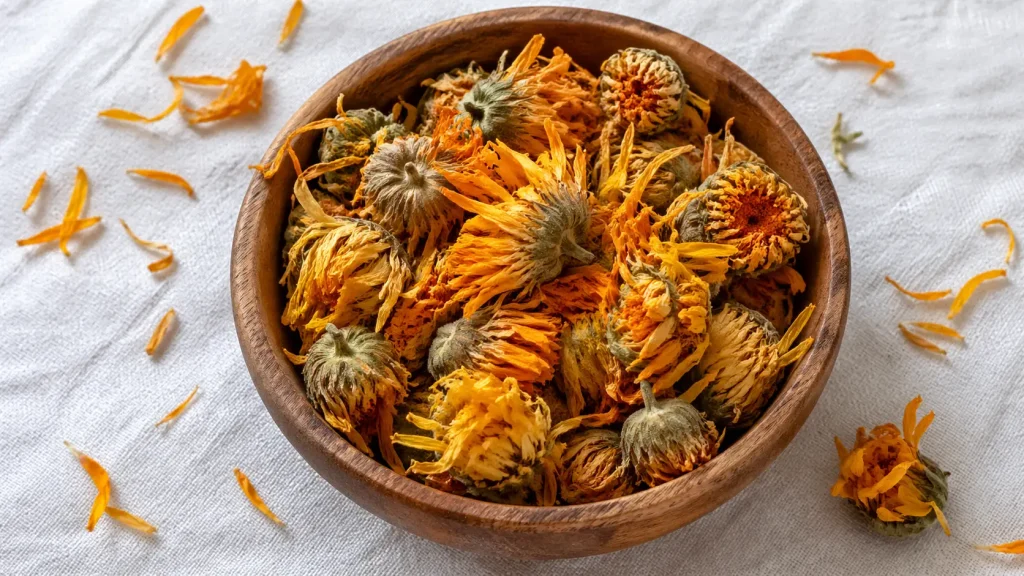 Before brewing, assess the petals across three criteria. Color should be vivid orange to deep golden yellow throughout. A uniform straw or tan color across the entire lot indicates light or heat damage. Petals naturally vary slightly in hue from the outer ray florets to the inner disc area, but the dominant tone should read warm and saturated.
Texture tells you about resin content. Press a few petals gently between your fingers. Quality petals leave a faint tacky impression. Petals that crumble immediately to dry powder have lost most of their resin fraction and will brew thin regardless of steep time.
Aroma should be present without pressing. Quality organic calendula flowers carry a faintly sweet, resinous, hay-adjacent scent. It is subtle compared to a high-volatile aromatic like peppermint, but it should register immediately when you open the container. Flat or musty scent points to age or moisture damage in storage.
For production buyers, Organic Calendula Flowers in wholesale quantities allow consistent lot testing at intake. Pull a small sample from each incoming bag, steep a test cup at your standard parameters, and compare against your baseline before the lot enters your blend line.
Brewing Methods and Exact Measurements
The fundamental rule for brewing organic calendula flowers is patience at low heat. High-temperature water does not improve extraction here. It drives off the delicate aromatic compounds before they fully develop in the cup.
Solo Calendula Brew
Use 3 grams (approximately 1 tablespoon loosely packed) of dried petals per 240 ml (8 fl oz) of water. Heat water to 195 to 200°F (90 to 93°C). Steep for 7 to 10 minutes covered. Covering the cup during steeping traps volatile aromatics that would otherwise escape with the steam. The resulting liquor runs clear amber to deep gold depending on petal quality and steep time.
For a more concentrated brew intended as a tea base for blends or iced preparations, double the petal quantity to 6 grams per 240 ml and maintain the same temperature and steep time. Do not exceed 10 minutes. Extended steeping past that point increases bitterness from the resin fraction past the point of palatability for most drinkers.
Golden Blend with Sunflower Petals
Sunflower Petals add visual texture and a subtle, clean sweetness that softens calendula’s resinous edge. Combine 2 grams of calendula petals with 1.5 grams of sunflower petals per 240 ml. Steep at 195°F (90°C) for eight minutes covered. The sunflower petals contribute color variation in the cup and a lighter mouthfeel that makes this blend approachable for customers unfamiliar with herbal tea.
Chamomile and Calendula Base Blend
This combination works well as a production blend foundation. Use 2 grams of organic calendula flowers, 2 grams of Organic Chamomile Flowers, and 0.5 grams of Organic Lavender Flowers per 240 ml. Steep at 195°F (90°C) for eight minutes. The chamomile smooths the bitterness and adds apple-adjacent sweetness. The lavender contributes a floral lift without dominating. This three-ingredient base serves as a starting point for dozens of finished blend variations.
For a vitamin C-adjacent wellness profile, add 1 gram of Organic Rosehips to the golden blend. Rosehips contribute a bright, tart note that creates a sweet-sour dynamic with the warmer calendula base. Steep time stays at eight minutes. Available in bulk for production-scale batches, these four ingredients together form one of the most commercially versatile floral tea bases in the wholesale market.
Flavor Pairings That Work
Calendula’s flavor profile sits at the intersection of honey, mild bitterness, and dried grass. That combination pairs naturally with ingredients that either amplify its warmth or contrast its weight with brightness.
Organic Lemon Verbena is one of the cleaner contrasts available. Its sharp, citrus-forward volatile oil cuts through calendula’s resinous body and lightens the overall cup considerably. Use it at a 1:3 ratio of lemon verbena to calendula by weight.
Ginger pairs well for warming functional blends. Fresh-dried Organic Ginger Root at 0.5 grams per 240 ml adds a clean heat that sits underneath the floral notes rather than competing with them. This pairing performs well in autumn and winter seasonal blends.
Avoid pairing calendula with strongly tannic botanicals. Black tea, rooibos at high concentrations, or dried elderberry in quantity all compete with the resin fraction rather than complementing it. The resulting cup muddles rather than layers.
Troubleshooting
The brew tastes flat and thin. This almost always traces back to petal quality rather than technique. Check the color and tackiness of your petals against the criteria above. If the material passes sensory evaluation, increase the petal quantity by 50% (to 4.5 grams per 240 ml) and confirm you are covering the cup during steeping.
The brew is too bitter. Steep time is the primary control for bitterness in calendula tea. Pull back to five to six minutes and reassess. Water temperature above 200°F (93°C) also accelerates bitter extraction from the resin fraction. Use a thermometer rather than estimating temperature from boil time.
The color is pale and watery despite good steep time. Petal age is the likely cause. Calendula petals past 18 months from harvest lose significant pigment and resin content regardless of storage conditions. Check the harvest date on your lot. If the material is within date but still pale, your storage environment may be exposing it to light or temperature cycling.
The petals clump and do not separate in the infuser. This happens with high-humidity material. Spread the petals on a dry surface for 10 to 15 minutes before weighing. In production environments, check incoming moisture content against the COA and reject lots above 10% moisture.
The flavor is inconsistent batch to batch. Inconsistency across batches of the same blend usually points to variation in petal lot rather than technique. When you receive a new lot of organic calendula flowers, brew a calibration cup at your standard parameters and compare against your reference notes from the previous lot. Adjust steep time or quantity to compensate for natural variation between harvests.
Storage and Quality
Store organic calendula flowers in airtight containers away from light, heat, and humidity. The target environment is below 65°F (18°C) and below 60% relative humidity. At these conditions, whole dried petals maintain quality for up to 24 months from harvest.
Glass or food-grade metal containers with gasketed lids outperform kraft bags for long-term storage of calendula. The resin content that makes calendula valuable also makes the petals more susceptible to absorbing ambient odors than lower-resin botanicals. Store away from strongly aromatic herbs like eucalyptus or clove, and away from cleaning products or industrial odors in warehouse environments.
Check stored petals every three to four months. Color, tackiness, and aroma are your primary quality indicators. Petals that have faded, dried completely crisp, or lost their characteristic scent should not enter production. Color loss mirrors the same resin and aromatic degradation that shows up in the cup as flat, thin flavor.
For production operations running multiple lots simultaneously, label every container with the herb name, supplier, lot number, harvest date, and your receiving date. Run strict first-in, first-out rotation. A lot that arrived three months ago should always enter the blend line before a fresher lot of the same material.
Safety
Organic calendula flowers are broadly considered a low-risk botanical for food and beverage applications. Herbalists traditionally use them in topical preparations, digestive support blends, and general wellness teas. At standard brewing quantities, they are well tolerated by most adults.
Calendula belongs to the Asteraceae (daisy) family. Individuals with known sensitivities to plants in this family, including ragweed, chrysanthemum, and chamomile, should exercise caution with calendula-containing preparations. This is a relevant disclosure for product labeling in tea and supplement contexts.
No medical claims should accompany calendula in any commercial product. Phrases like “traditionally used for,” “may support,” and “herbalists often recommend” keep label and marketing copy within regulatory guidelines. Avoid any language that implies a specific health outcome or disease treatment.
Calendula tea at standard brewing concentrations is generally appropriate as a daily beverage for healthy adults. For pregnant individuals, as with many herbal preparations, consultation with a qualified practitioner is the appropriate guidance rather than general use claims on product packaging.
FAQ
How many grams of organic calendula flowers should I use per cup?
Start with 3 grams (approximately 1 tablespoon loosely packed) per 240 ml of water for a standard brew. For a stronger, more concentrated cup, increase to 5 to 6 grams using the same volume of water and the same steep parameters. Adjust based on your flavor preference and the petal quality of your specific lot.
What temperature is best for brewing calendula tea?
195 to 200°F (90 to 93°C) produces the best balance of extraction and aromatic preservation. Boiling water (212°F / 100°C) accelerates bitter extraction from the resin fraction and drives off aromatic compounds before they develop fully in the cup. A simple kitchen thermometer removes the guesswork entirely.
Can I cold-brew organic calendula flowers?
Yes. Cold brewing at room temperature for eight to 12 hours or in the refrigerator for 12 to 24 hours produces a lighter, less bitter extraction with a cleaner floral character. Use 5 grams per 240 ml to compensate for the lower extraction efficiency of cold water. Strain and refrigerate the finished brew, and consume within 48 hours.
Why does my calendula tea look pale instead of golden?
Pale color usually signals petal age or light damage during storage. Fresh, high-quality organic calendula flowers steep to a clear amber or deep gold. If your brew reads pale yellow or barely tinted, check the harvest date on the lot and assess petal color and tackiness before your next brew.
Does organic calendula flowers tea have caffeine?
No. Calendula is a caffeine-free botanical. It blends well with other herbal ingredients for a fully caffeine-free cup, or it can serve as a floral addition to a green or white tea base for blends that do include caffeine. Label finished products accordingly based on all ingredients in the formula.
How long does brewed calendula tea stay fresh?
Brewed calendula tea holds quality for up to 24 hours refrigerated in a sealed container. The color deepens slightly as it sits, and the flavor mellows. For iced tea applications, brew at double concentration and pour over ice immediately after straining to lock in color and aroma.
What is the shelf life of dried organic calendula flowers?
Under proper storage conditions (below 65°F / 18°C, below 60% relative humidity, sealed from light), dried calendula petals maintain quality for up to 24 months from harvest. Assess color, aroma, and petal texture at intake and every three to four months during storage. Material past 18 months should clear a sensory evaluation before entering production.
Can I use organic calendula flowers in blends alongside strongly flavored herbs?
Calendula holds its own against mild to moderate flavors like chamomile, lavender, rosehips, and lemon verbena. It loses definition when paired with high-intensity herbs like spearmint, licorice root, or strong spices at equal ratios. If you want calendula’s character to read clearly in a blend, keep competing high-intensity botanicals below 15% of the total blend weight.
Organic calendula flowers reward the brewer who pays attention to temperature, time, and material quality. Get those three variables right and the cup reliably delivers its characteristic warmth, color, and layered floral depth. For tea blenders and formulators sourcing at scale, consistent petal quality and proper lot documentation turn a beautiful botanical into a dependable production ingredient. Wholesale quantities make it practical to stock calendula as a permanent line item rather than a seasonal feature.