Hibiscus Iced Tea: Tart, Bright Brew Guide
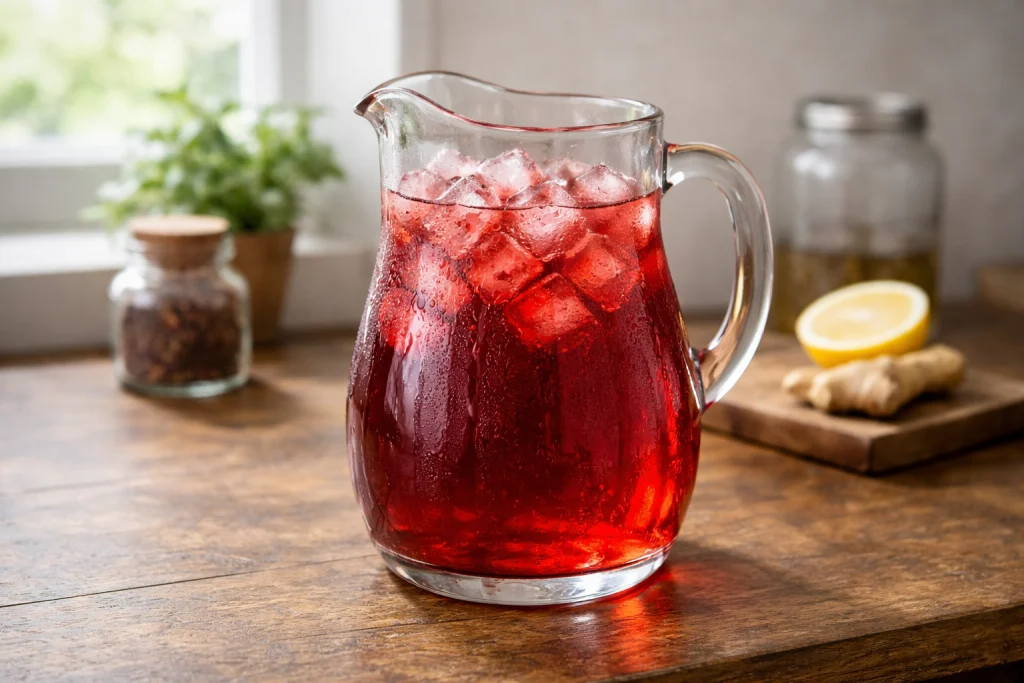
There’s a moment when hibiscus iced tea hits the glass, blooms ruby, and makes the whole kitchen smell like bright tang and summer. Herbalists love hibiscus for its bold color and crisp, tart character. Beverage makers love it because it behaves predictably: it extracts quickly, scales well, and keeps its voice even when you dilute, chill, carbonate, or blend.
This guide is built for both worlds. You’ll get sensory cues (what “done” smells and tastes like), plus repeatable ratios in grams and teaspoons, steep temperatures, and two reliable paths to iced tea that won’t go flat or muddy. Then we’ll take the same hibiscus base into kombucha second fermentation (2F) with a strict method you can log and repeat bottle after bottle.
If you’re stocking up, start with hibiscus cut & sifted as your backbone ingredient. You can keep it elegantly solo, or build a bright blend with citrus peel, mint, ginger, or warming spice, all without losing that clean tart snap.
What “Cut & Sifted” Hibiscus Does in the Cup
Cut & sifted hibiscus is all about surface area and flow. Compared to whole calyces, it generally infuses faster and more evenly, especially in larger batches. That’s great for production, but it also means you need to watch time and temperature so tartness stays lively instead of rough.
A good infusion should smell like cranberry, red fruit, and fresh acidity. In the mouth it’s tangy, not bitter. If it tastes harsh or “scratchy,” you likely pushed steep time too long, used water that was too hot for too long, or squeezed the solids aggressively.
For consistent results, use hibiscus cut & sifted and strain through a fine mesh. If you want extra clarity for a pitcher that looks jewel-like on ice, strain a second time through a paper filter or a clean cloth. That small step can make your iced tea look premium with almost no extra work.
Hibiscus Iced Tea Ratios and Brew Styles
 To make hibiscus iced tea that tastes vivid after chilling, you want enough concentration to survive dilution from ice. Below are two reliable brew styles. Pick one based on your workflow.
Method 1: Hot infusion, then chill (clean and classic)
Per 1 quart / 946 ml finished tea
Hibiscus: 8 g (about 4 teaspoons of cut & sifted)
Water: 946 ml
Water temp: 90–96°C / 194–205°F
Steep: 8–10 minutes
This yields a tart, bright base that stays expressive over ice. If you prefer a softer edge, steep 7 minutes and increase hibiscus slightly (to 9 g) rather than steeping longer.
Method 2: Flash-chill concentrate (fast and ice-forward)
Make a concentrate you pour over ice
Hibiscus: 16 g (about 8 teaspoons)
Hot water: 475 ml at 90–96°C / 194–205°F
Steep: 10 minutes
Finish: strain, then pour over 475 ml ice (or cold water) to reach 946 ml
This “hot then ice” approach locks in aroma and keeps the color electric. It’s also an easy way to dial your strength for events or busy service.
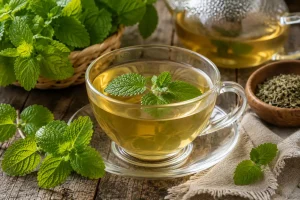
For blending, hibiscus loves citrus. Try adding lemon peel to the steep for a brighter, lifted finish. If you like a cooler, greener top note, peppermint leaf is a clean partner that plays well with carbonation later.
(Teaspoon measures are approximate because particle size varies. For repeatability, weigh whenever possible.)
Water, Temperature, and Timing (How to Keep Tartness Bright)
Hibiscus is forgiving, but it’s not indifferent. Temperature and time decide whether your tea tastes “sparkling tart” or “over-steeped sour.”
Use water that’s just off boiling, not a rolling boil held for ages. Overly aggressive heat for too long can push the infusion toward harsh acidity and flatten the fruit-like notes. If you’re brewing large batches, keep your hot water in the 90–96°C / 194–205°F window and set a timer.
A simple sensory check:
At 6 minutes: fragrance should be vivid and fruity-tart.
At 8 minutes: the body fills in, color deepens.
Past 12 minutes: you risk a sharper, less rounded profile.
If you’re making hibiscus iced tea for a crowd, consider brewing slightly stronger than you think you need. Ice always dilutes, and cold numbs sweetness while emphasizing acidity. A slightly fuller body will taste more balanced once chilled.
For extra roundness without adding sweeteners, add a small amount of cinnamon chips or ginger root cut to the steep. Both give structure and warmth so the tartness reads “bright” instead of “thin.”
Building a Balanced Iced Blend (Without Hiding Hibiscus)
Hibiscus is a lead singer. The trick is to support it, not smother it. Think in layers:
Backbone (tart + color): hibiscus
Lift (high notes): citrus peel
Fresh top (cool aromatics): mint
Body (roundness): rose hips or gentle spice
Spark (heat or zing): ginger
Here are two blend templates that scale well.
Ruby Citrus Mint (pitcher-friendly)
Per 1 quart / 946 ml
Hibiscus: 7–8 g
lemon peel: 1–2 g (about 1–2 teaspoons)
peppermint leaf: 0.7–1 g (about 1–2 teaspoons)
Steep at 90–96°C / 194–205°F for 7–9 minutes.
Hibiscus Rose-Ginger (rounded and “red fruit” feeling)
Per 1 quart / 946 ml
Hibiscus: 7–8 g
rose hips cut: 3–4 g (about 1 tablespoon)
ginger root cut: 1–2 g (about 1 teaspoon)
Steep at 90–96°C / 194–205°F for 9–10 minutes.
Both blends keep hibiscus iced tea front and center, but they taste more complete. For a naturally “juicier” impression (without making health claims), herbalists often lean on rose hips for gentle fruitiness and body.
Sweetening Options That Still Taste Clean on Ice
Hibiscus loves a little sweetness, but the goal is clarity, not candy. For iced tea service, sweeten while the tea is still warm so it dissolves cleanly. Then chill.
A practical benchmark:
Lightly sweet: 10–15 g sugar per quart (about 2–3 teaspoons)
Balanced: 20–30 g sugar per quart (about 1–2 tablespoons)
Syrup method: make a 1:1 simple syrup and add to taste (easier to scale)
If you’re planning kombucha 2F, go lighter. Yeast and bacteria will keep working, and sweetness can turn into pressure. For hibiscus iced tea that’s meant to become fizzy, use minimal sweetener up front and control sugar at bottling.
Want a richer, “tea-soda” vibe? Add a tiny pinch of cinnamon chips to the brew and sweeten modestly. It reads like depth, not dessert.
Kombucha 2F With Hibiscus: Strict, Repeatable Method
Hibiscus in 2F is a gift to kombucha makers because you can get color, tartness, and aroma without fruit pulp chaos. This section is designed to be repeatable, logged, and scaled.
You can use hibiscus iced tea as your flavor driver, but for fermentation control, a concentrate is usually better. It gives you predictable dosing per bottle.
Option A: Tea concentrate dosing (recommended)
Make hibiscus concentrate
Hibiscus: 20 g hibiscus cut & sifted
Water: 500 ml
Temp: 90–96°C / 194–205°F
Steep: 10 minutes
Strain well. Cool to room temp (or chill).
This yields a strong concentrate you can dose precisely.
Dose per 16 oz / 473 ml bottle
Hibiscus concentrate: 20–60 ml (start at 40 ml for bold color)
Optional support notes:
lemon peel infusion: 5–15 ml (or a few thin strips steeped separately)
ginger root cut tea: 10–20 ml
peppermint leaf tea: 10–20 ml (cooling, aromatic)
Add sugar (for carbonation)
Choose one:
4–8 g sugar per bottle (about 1–2 teaspoons), depending on your base kombucha and temperature.
Or 10–20 ml of 1:1 simple syrup.
Bottle and ferment
Fill bottle with finished kombucha, leaving 2–3 cm headspace.
Cap tightly.
2F time: 24–72 hours at room temp (warmer ferments faster).
Burp only if you know your bottles run hot and you’re using high sugar. Otherwise, avoid burping so carbonation develops consistently.
Refrigerate to halt fermentation and set bubbles.
Consistency tips:
Weigh hibiscus for the concentrate every time.
Use a graduated cylinder or syringe for dosing ml amounts.
Keep batch notes: concentrate grams, steep time, ml per bottle, sugar grams, 2F duration, ambient temp, and tasting notes.
Option B: Direct botanicals in bottle (optional)
This is simpler, but it introduces variability and more sediment.
Per 16 oz / 473 ml bottle
Hibiscus: 0.5–1.5 g (about 1/4 to 3/4 teaspoon) hibiscus cut & sifted
Optional: a pinch of ginger root cut (tiny, not chunky)
Sugar: 4–8 g (1–2 teaspoons)
Add botanicals first, then sugar, then kombucha. Cap, 2F 24–72 hours, then refrigerate and strain when pouring if you want a clean glass.
For controlled flavor across a full batch, Option A almost always wins. It also keeps the “ruby” look of hibiscus iced tea while reducing the risk of gritty sediment in the final pour.
Troubleshooting: Tartness, Carbonation, Sediment, Aroma Loss
If you’re dialing in hibiscus iced tea or hibiscus 2F, these are the most common issues and the quickest fixes.
Flat flavor (tea tastes thin after chilling)
Cause: too weak for ice, or steep too short.
Fix: increase hibiscus by 1–2 g per quart, or use the flash-chill concentrate method. Chill fully before judging.
Too tart or harsh
Cause: steep too long, or too much hibiscus for your water volume.
Fix: reduce steep time by 1–2 minutes before reducing grams. Add a small amount of cinnamon chips or rose hips cut next time for roundness.
Over-carbonation in 2F
Cause: too much sugar, warm room, long 2F time, or very active base kombucha.
Fix: reduce sugar to 4 g per bottle, shorten 2F, or chill earlier. Use the concentrate dosing method so you don’t accidentally add hidden sugars from fruit.
Not enough carbonation
Cause: too little sugar, cold room, weak yeast activity, or leaky caps.
Fix: raise sugar slightly (by 1–2 g), ferment warmer, and verify caps and bottles. Also make sure your kombucha is not overly dry before bottling.
Sediment (grit at the bottom)
Cause: fine hibiscus particles, direct-bottle botanicals, or inadequate straining.
Fix: strain concentrate through fine mesh, then through paper or cloth for extra clarity. Use Option A to keep solids out of bottles.
Aroma loss (smells great hot, dull cold)
Cause: long hot hold, slow cooling, or oxidation.
Fix: flash-chill, cover while steeping, and store in airtight glass. Consider pairing with lemon peel or peppermint leaf to keep a bright aromatic top note.
Storage + Quality: Airtight, Humidity, and Freshness Cues
Hibiscus is a color-forward botanical. Light, air, and humidity are the enemies of “ruby.”
 Storage rules
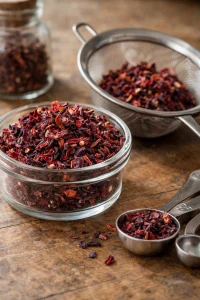
Keep hibiscus cut & sifted in an airtight container away from light.
Avoid humid shelves near kettles or dishwashers.
If you’re in a humid climate, consider smaller jars you rotate through quickly.
Quality cues
Color: deep burgundy to red is normal. If it looks faded brown, it may be old or light-damaged.
Scent: should be bright and tart-fruity. If it smells dusty, flat, or papery, expect a dull cup.
Brew behavior: fresh hibiscus infuses quickly and evenly. Older material can taste more muted and require more grams for the same impact.
For finished tea, store in the fridge in glass. For best flavor, drink within 48–72 hours. It will stay safe longer when refrigerated, but aroma is a fragile thing.
If you’re making hibiscus iced tea for service, brew daily or every other day, and use the concentrate method to keep your output consistent.
Safety and Compliant Language (Herbalist-Style, No Medical Claims)
Hibiscus is widely enjoyed as a food herb in teas and beverages. Herbalists have traditionally used hibiscus in many cultures as part of everyday refreshment. That said, this article is about flavor, process, and quality, not treatment.
Practical safety notes:
If you’re pregnant, nursing, taking medications, or managing a health condition, it’s smart to check with a qualified healthcare professional before making significant dietary changes.
Keep kombucha ferments clean and food-safe. Use clean bottles, fresh caps, and refrigeration to slow fermentation once you like the result.
Avoid making disease claims. Focus on what you can actually control: taste, strength, clarity, and fermentation consistency.
When you talk about your beverage, compliant phrasing looks like:
“Traditionally used in herbal tea.”
“Herbalists often use it for a bright, tart profile.”
“May support a refreshing daily ritual” (without promising outcomes).
FAQ: Hibiscus Iced Tea and Kombucha 2F
1) How strong should hibiscus iced tea be for a pitcher over ice?
For a quart (946 ml), start at 8 g hibiscus and steep 8–10 minutes. If you use lots of ice, brew slightly stronger or use a concentrate.
2) Can I cold-brew hibiscus instead of using hot water?
Yes. Use 8–10 g per quart in cold water for 8–12 hours in the fridge, then strain. It’s usually smoother, but the aroma can be softer than hot steep plus flash-chill.
3) Why does my hibiscus tea taste harsh instead of bright?
Usually over-steeping or too much heat time. Shorten the steep first, then adjust grams. Avoid squeezing the solids hard.
4) What’s the best way to add hibiscus to kombucha 2F?
Use a cooled concentrate and dose by ml (Option A). It’s the most repeatable and reduces sediment.
5) How much hibiscus concentrate should I use per 16 oz (473 ml) bottle?
A practical range is 20–60 ml. Start around 40 ml for bold color and tartness, then adjust to taste.
6) Do I need extra sugar for carbonation in 2F?
Usually yes. 4–8 g sugar per bottle (1–2 teaspoons) is a common range, depending on your base kombucha and temperature.
7) How do I keep hibiscus iced tea from tasting dull after refrigeration?
Flash-chill, store airtight in glass, and consider a small amount of citrus peel or mint to keep the aroma lifted.
8) What pairs best with hibiscus for a clean, tart profile?
Citrus peel and mint keep it crisp. Ginger, cinnamon, and rose hips add roundness without burying the hibiscus character.