Elderberry Syrup Recipe: How to Make It at Home
A good elderberry syrup recipe needs only a few pantry ingredients and about an hour of your time. Dried elderberries give the syrup its deep purple color and tart, jammy flavor. Warming spices round it out, and raw honey adds sweetness. This guide walks you through the whole process, from simmering to storage.
In addition, you will find flavor variations, common mistakes, and answers to the questions home cooks ask most. So whether this is your first batch or your tenth, you will pick up something useful.
Why Make Your Own Elderberry Syrup Recipe at Home
Store bought syrups are often expensive and loaded with fillers. When you cook your own batch, you control every ingredient. You can also adjust the sweetness and the spice level to suit your family. In addition, a homemade batch costs a fraction of the retail price.
Elderberry syrup has a long history in European kitchens. Families traditionally prepared it in late summer and kept it through the colder months. Today, many people simply enjoy it drizzled over pancakes, stirred into sparkling water or taken by the spoonful.
The black elder tree (Sambucus nigra) grows wild across Europe, western Asia and North Africa. For centuries, rural cooks picked the dark clusters in August and September. Then they cooked the berries into cordials, jams, wines and thick syrups. In fact, old English recipe books list elderberry “rob,” a slow cooked berry syrup sweetened with sugar. Folk herbalists also brewed the flowers in spring, so the tree gave something in every season.
Ingredients You Will Need
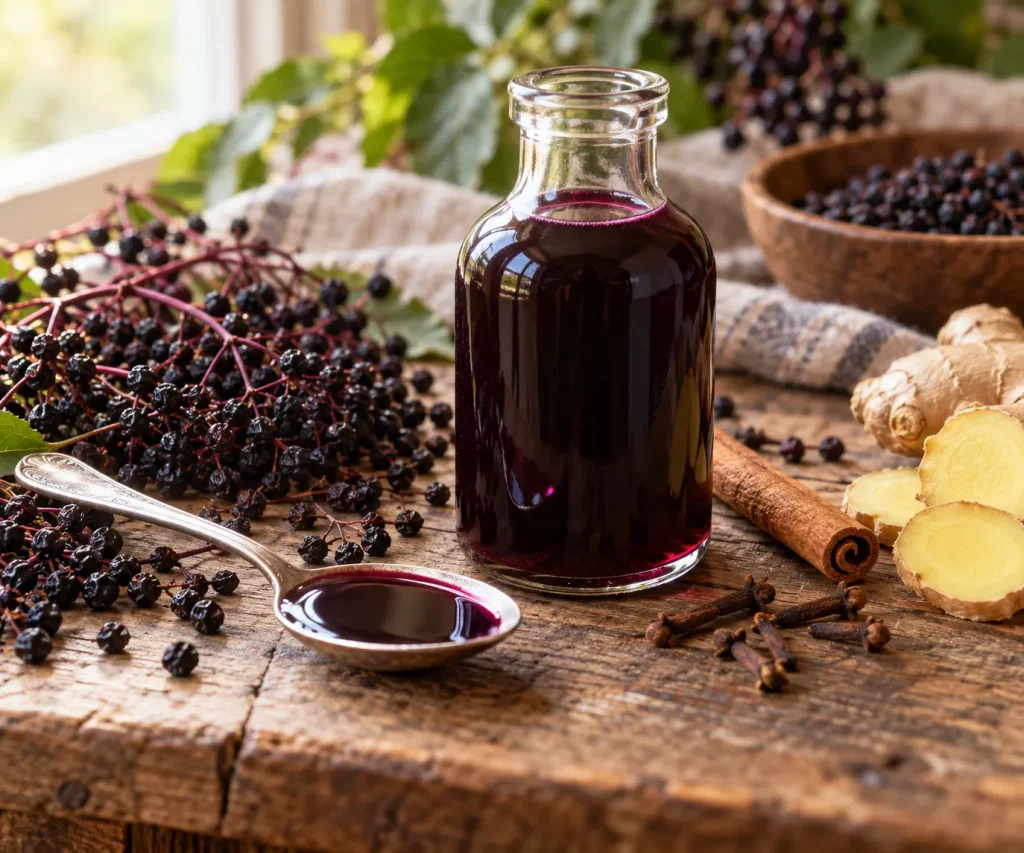
- 2/3 cup dried organic elderberries
- 3 1/2 cups filtered water
- 1 tablespoon organic ginger root, cut and sifted
- 1 teaspoon true Ceylon cinnamon, cut and sifted
- 4 to 5 whole cloves
- 1 cup raw honey
Each ingredient plays a clear role. The table below shows what it adds and how you can adjust it.
| Ingredient | What it adds | How to adjust |
|---|---|---|
| Dried elderberries | Color, body, tart berry flavor | Use up to 1 cup for a richer syrup |
| Ginger root | Gentle heat and a spicy aroma | Halve it for children’s taste buds |
| Ceylon cinnamon | Soft sweetness and warmth | Add a second teaspoon in winter |
| Whole cloves | Deep, festive spice notes | Keep to 5 or fewer, since cloves dominate fast |
| Raw honey | Sweetness and a thicker texture | Use 3/4 cup for a tarter syrup |
Elderberries are a seasonal crop, so they sometimes sell out. If our elderberries are temporarily out of stock, you still have tasty options. For example, organic elderflowers make a light, floral syrup. Likewise, organic rose hips give a bright, tangy syrup with a pretty red color. Both are covered in the variations section below.
Step by Step Elderberry Syrup Recipe
- Add the elderberries, water, ginger, cinnamon and cloves to a medium saucepan.
- Bring the mixture to a boil over medium heat.
- Lower the heat and simmer uncovered for 40 to 45 minutes, until the liquid reduces by about half.
- Remove the pan from the heat and let it cool for 15 minutes.
- Mash the berries gently with a spoon to release the remaining juice.
- Strain the liquid through a fine mesh sieve or cheesecloth into a bowl.
- Stir in the honey once the liquid feels warm, not hot.
- Pour the finished syrup into a clean glass jar and seal it.
This elderberry syrup recipe yields about 2 cups of syrup. That is enough for a small family over two weeks, and it is the elderberry syrup recipe we return to every fall. However, you can double every amount for a bigger batch. Just use a wider pot, because more surface area helps the liquid reduce on time.
A quick tip on measuring the reduction: before you start, dip a wooden spoon into the pot and mark the water line. Then check the spoon as the syrup simmers. When the level drops to about half, the syrup is ready to strain.
Slow Cooker and Pressure Cooker Options
You can also make this syrup hands free. In a slow cooker, combine the berries, spices and water, then cook on low for 4 to 5 hours with the lid slightly open. Meanwhile, the liquid reduces slowly and gently. In a pressure cooker, cook on high for 9 minutes, then let the pressure release naturally. However, a pressure cooker does not reduce the liquid, so simmer it on the stove for 10 to 15 minutes afterward. In both cases, strain and add honey only once the liquid is warm.
Tips for the Best Flavor
First, always cook dried elderberries. Raw or unripe berries are not meant to be eaten, so the simmering step matters. Second, wait until the liquid cools before you add honey. Very high heat dulls its flavor. Finally, taste the syrup before bottling. If it feels too tart, add a little more honey.
You can also experiment with extra botanicals. For example, a spoonful of rose hips adds a bright, fruity note. Likewise, a few elderflowers give the syrup a soft floral finish.
Even experienced cooks make a few common mistakes. Here is what to watch for:
- Boiling hard the whole time: a rolling boil scorches the sugars, so keep it at a gentle simmer.
- Using an aluminum pot: the acidic berries can react with it, so choose stainless steel or enamel.
- Skipping the mash: pressing the berries releases a lot of extra juice and color.
- Squeezing the cheesecloth too hard: this pushes fine sediment through and clouds the syrup.
- Bottling while hot: warm syrup in a sealed jar collects condensation, which shortens its life.
Flavor Variations for Your Elderberry Syrup Recipe
Once you know the basic method, the elderberry syrup recipe becomes a template. Then you can swap spices and fruit to match the season. Here are some ideas that home cooks love:
- Citrus spice: add the peel of one orange during the last 10 minutes of simmering.
- Chai style: add 3 crushed cardamom pods and one star anise pod with the other spices.
- Berry blend: replace a quarter of the elderberries with dried rose hips for extra tang.
- Vanilla honey: stir in half a teaspoon of vanilla extract along with the honey.
If elderberries are not available, try a rose hip syrup. Simmer 1/2 cup of rose hips with 3 cups of water, the same spices and a strip of lemon peel for 30 minutes. Then strain it through cheesecloth twice, because rose hips contain fine hairs. Finally, stir in 3/4 cup of honey once the liquid is warm.
For an elderflower syrup, the method is different. First, bring 2 cups of water and 1 cup of sugar to a simmer until the sugar dissolves. Then take the pot off the heat and add 1/2 cup of elderflowers and the juice of one lemon. Cover and steep for 30 minutes, then strain. As a result, you get a delicate syrup for lemonade, cocktails and sparkling water.
How to Choose and Store Elderberries and Homemade Syrup
Any elderberry syrup recipe is only as good as its berries. Look for dried elderberries that are dark purple to nearly black, with a slight wrinkle. They should smell fruity and a little earthy. Also, check that the batch has very few stems, because stems should never go into the pot. Pale, dusty or musty berries are past their best, so skip them.
Keep the finished syrup in the refrigerator. A batch usually stays fresh for about two to three weeks. For longer storage, freeze the syrup in an ice cube tray. Then pop out a cube whenever you need one. Meanwhile, store your dried elderberries in an airtight container away from light. Our dried herbs shelf life guide explains how to keep them fresh.
Always use clean, dry glass jars and a clean spoon each time you serve. In addition, label each jar with the date you made it. If you ever see mold, fizzing or a sour smell, throw the batch away.
More Ways to Use Elderberries
Elderberries work well beyond syrup. You can brew them into tea, blend them into jams or add them to winter tea blends. Our winter tea blend guide shares several ideas. If you plan to buy in larger quantities, read our elderberries bulk buying guide.
The syrup itself is very versatile, too. For example, drizzle it over yogurt, oatmeal or vanilla ice cream. You can also shake it into iced tea, whisk it into a vinaigrette or use it to glaze roasted pork. For a simple spritzer, stir 2 tablespoons of syrup into a glass of sparkling water with a squeeze of lime. Likewise, a spoonful in hot water with lemon makes a cozy evening drink. Not sure which warm drink suits your evenings? Take our quick cold weather tea quiz.
A quick word on safety. Raw elderberries, leaves, bark and stems are not edible, so always cook the berries well. Honey is not safe for babies under one year old. Also, if you are pregnant, nursing, managing a health condition or taking medication, talk with your healthcare provider before using elderberry products regularly.
Frequently Asked Questions About Elderberry Syrup
Can I use fresh elderberries instead of dried?
Yes. Use about twice the amount of fresh, fully ripe berries and remove every stem. Always cook them well before use.
Can I make elderberry syrup without honey?
Yes. Maple syrup or cane sugar works as a substitute. The texture and shelf life will change slightly, so keep it refrigerated.
Why is my elderberry syrup so thin?
The liquid probably did not reduce enough. Simmer it a little longer next time, until it drops to about half of the starting volume.
Can I can elderberry syrup for the pantry?
Raw honey syrups are best kept cold. For this reason, we suggest the fridge or freezer instead of home canning.
Can I reuse the strained berries?
Yes, once. Simmer them again with fresh water for a light elderberry tea. However, the flavor will be much weaker.
Start Your Next Batch
A homemade elderberry syrup recipe is simple, affordable and fun to customize. First, gather good berries and whole spices. Then simmer, strain and sweeten with care. Finally, store the jar cold and enjoy it in drinks, breakfasts and desserts. Ready to begin? Stock up on organic spices, elderflowers and rose hips, and keep an eye on our elderberries for your next batch.