Cumin Seed Cooking: Tips and Techniques
Cumin seed cooking is a fundamental skill that unlocks one of the most universally beloved flavors in the culinary world. Cumin (Cuminum cyminum) is a small, elongated seed with a warm, earthy, slightly bitter profile that forms the backbone of countless cuisines across South Asia, the Middle East, Latin America, and North Africa. Furthermore, the difference between properly prepared cumin and poorly handled cumin is enormous — and knowing the techniques makes all the difference.
This guide covers every method you need for cumin seed cooking, from dry toasting and oil blooming to grinding and blending. Additionally, you will find flavor pairing recommendations and practical tips that experienced cooks use to get the most from this essential spice.
Why Cumin Seeds Beat Ground Cumin in Most Situations
Ground cumin is convenient, but whole cumin seeds give you far more control and flavor. The volatile aromatic oils inside a whole seed stay protected until heat is applied. Once you grind or crack a seed, those oils begin to dissipate and oxidize, which is why pre-ground spices fade so quickly.
Cumin seed cooking starts with whole cumin seeds that you transform through heat just before or during cooking. Moreover, the act of toasting or blooming whole seeds produces aromatic compounds that simply do not exist in the same way in pre-ground powder.
Ground cumin powder still has its place — in marinades, spice rubs, and dishes where a smooth texture matters. Cumin powder is ideal when you need the flavor distributed evenly throughout a dish without any textural element. Use both forms in your kitchen and you will have maximum flexibility.
Dry Toasting: The Foundation of Cumin Seed Cooking
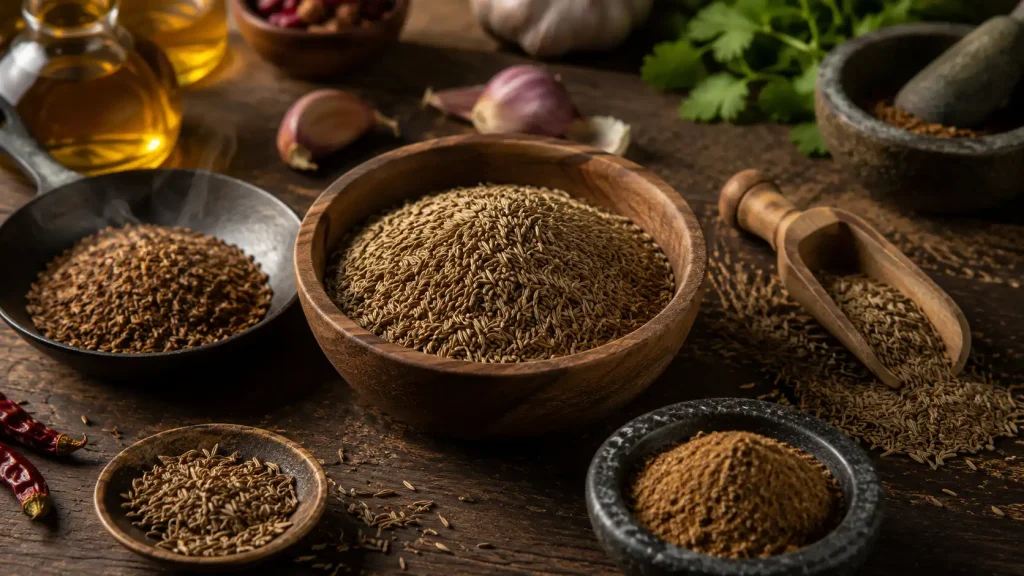
Dry toasting is the simplest and most essential technique. Place whole cumin seeds in a dry skillet over medium heat. Do not add any oil. Stir or shake the pan constantly for sixty to ninety seconds until the seeds turn one shade darker and release a deeply fragrant, smoky aroma.
Remove them from the heat immediately and transfer to a plate or mortar to stop the cooking. They continue to toast slightly from residual heat, so pulling them just before they look fully done gives you the right result. If they smell burnt, start over — burnt cumin adds an unpleasant bitter note to any dish.
Toasted and cooled cumin seeds can be ground immediately or stored in an airtight container for up to a week. Freshly toasted and ground cumin has a richness and complexity that makes a noticeable difference in dishes like hummus, chili, and spice blends. Consequently, this technique is worth making a habit.
Blooming Cumin in Oil: The Tadka Technique
Blooming, or tempering, is the technique at the heart of South Asian cooking. Heat oil or ghee in a pan over medium-high heat until shimmering but not smoking. Add whole cumin seeds and wait for them to sizzle and pop — this takes about thirty seconds. The seeds should turn golden and fragrant very quickly.
At this point, add your other ingredients (onions, garlic, chiles, or vegetables) immediately to stop the cumin from burning. The cumin-infused oil then coats every ingredient that follows, distributing that deep, roasted flavor throughout the dish. In fact, this single technique is responsible for much of the characteristic flavor in Indian dals, curries, and vegetable dishes.
Cumin pairs excellently with coriander seeds in the tadka method. Both seeds go into the oil at the same time, as they have similar blooming times. Additionally, adding fenugreek seeds to the same oil creates a richer, more complex base flavor.
Grinding Cumin Seeds at Home
Grinding your own cumin from toasted whole seeds is one of the highest-impact upgrades you can make to your spice pantry. Use a dedicated spice grinder or coffee grinder. Grind in small batches — two tablespoons at a time — so the powder stays fresh.
A mortar and pestle works well if you prefer a slightly coarser, more rustic grind. In some Mexican and Central American cooking traditions, cumin is hand-ground in a stone molcajete. The slightly uneven texture this produces actually works beautifully in salsas and bean dishes.
For a pre-made, high-quality option, ground cumin powder is available and convenient for everyday cooking. However, once you experience freshly ground cumin from toasted seeds, you will use it for any dish where cumin flavor is front and center.
Cumin in Global Cuisines
No spice appears in more world cuisines than cumin. In Indian cooking, it is present in nearly every savory dish — from simple dal to complex biryanis. In Mexican cooking, cumin is essential in chili, taco seasoning, and black bean preparations. Similarly, Middle Eastern cuisines rely on cumin in falafel, shawarma, and za’atar-adjacent blends.
In North African cooking, cumin is a foundation of ras el hanout and chermoula. Ethiopian cooks use it in berbere alongside fenugreek and coriander. Even European cuisines feature cumin in regional dishes, particularly across the Iberian Peninsula and Eastern Europe, where caraway seed (a close relative) is sometimes used interchangeably.
Understanding cumin seed cooking within these cultural contexts helps you make better decisions about preparation methods. A Mexican dish calls for a different approach — usually dry-toasted and ground — than an Indian tadka preparation where whole seeds bloom in oil.
Flavor Pairings and Recipe Ideas
Cumin has strong affinity for coriander, turmeric, garlic, chili, and citrus. It also pairs well with earthy legumes like lentils, chickpeas, and black beans, which is why it appears so consistently in legume-based dishes across cultures.
For a simple showcase of cumin seed cooking, try a basic jeera rice. Toast one teaspoon of cumin seeds in a tablespoon of ghee until golden. Add rinsed basmati rice, water, and salt, then cook as usual. The result is fragrant, savory rice with the seeds providing occasional bursts of intense flavor.
Another simple recipe: heat olive oil, bloom cumin seeds, add crushed garlic and canned chickpeas. Season with salt, lemon juice, and a pinch of smoked paprika. This five-minute dish showcases how cumin transforms even the simplest ingredients into something deeply satisfying.
Storing Cumin Seeds for Maximum Freshness
Whole cumin seeds stay fresh for two to three years when stored in an airtight container away from heat and light. Ground cumin loses its peak potency within six to twelve months. Therefore, buying whole seeds and grinding in small batches is the most efficient approach for flavor and shelf life.
Store your spices in a dedicated cabinet or drawer away from the stove. Heat exposure degrades volatile aromatic oils much faster than simple age. Additionally, buying in reasonable quantities — enough to use within a year — ensures you always cook with fresh spice rather than stale, faded powder.
Important note: This article is intended for culinary education. Cumin is a food spice with a long history of safe culinary use. If you have a cumin allergy or are taking medications that interact with spice compounds, consult your healthcare provider.
Frequently Asked Questions
How much cumin seed should I use per dish?
A starting point for a dish serving four people is one teaspoon of whole seeds or half a teaspoon of ground cumin. Cumin flavor builds as it cooks, so start conservatively and adjust to taste. Dishes that cook for longer periods develop stronger cumin flavor than quick-cooked preparations.
Can I use ground cumin instead of whole seeds in a tadka?
Ground cumin burns almost instantly in hot oil, making it unsuitable for the tadka technique. Add ground cumin after the initial tempering phase, once you have added onions or other moisture to the pan. This prevents burning and allows the powder to bloom gently in the residual heat.
What does bloomed cumin smell like versus raw cumin?
Raw cumin smells sharp and slightly grassy. Bloomed cumin in hot oil releases a dramatically different aroma — deeper, smokier, nuttier, and more complex. This transformation happens within seconds and is the defining sensory cue that your tadka is ready to receive the next ingredients.
How do I know if my cumin seeds are fresh?
Fresh cumin seeds smell potent even at room temperature. Crush one seed between your fingers and take a sniff — the aroma should be immediate and intense. Old, stale seeds will have a faint or flat smell. Additionally, seeds that have lost their aroma will deliver disappointing flavor regardless of preparation technique.
Start with the best ingredient: explore organic whole cumin seeds at Hatton Naturals and elevate every dish you cook.