Black Pepper Tea: How to Brew It and Best Flavor Pairings
Black pepper tea is a warming, aromatic drink that many people discover on a cold evening. It sounds unusual at first. However, pepper has a long history in spiced drinks, from Indian chai to old European mulled wines. In this guide, you will learn how to brew it from whole peppercorns, how crushing changes the flavor, and which spices pair best. We also cover popular variations, common mistakes and simple storage tips.
What Is Black Pepper Tea?
At its simplest, this tea is hot water infused with black peppercorns. The peppercorns release their aromatic oils and gentle heat into the water. The result tastes woody, slightly citrusy and pleasantly warm, without the harsh bite of a mouthful of ground pepper.
Most people do not drink it plain, though. Instead, they add honey, lemon, ginger or other spices. Because pepper blends so well with sweet and sour flavors, it works as a base for many cozy drinks. In this way, it is similar to a basic chai, only lighter and quicker to make.
Black Pepper Tea in Tradition
Pepper has been part of warming drinks for centuries. In India, black pepper is a classic chai spice, often paired with ginger, cardamom and cloves. Ayurvedic cooks have traditionally added pepper to warm drinks during the cooler months. In Sri Lanka and parts of Southeast Asia, families brew simple spiced infusions with pepper and coriander seeds.
Turmeric drinks are another well-known tradition. In South Asian homes, warm milk with turmeric and a pinch of black pepper has been enjoyed for generations. Today, this drink is often called golden milk or golden tea. Many cooks traditionally add pepper to turmeric, and the pairing has become a modern favorite as well.
How to Brew Black Pepper Tea from Whole Peppercorns
Whole peppercorns give the cleanest and most aromatic cup. Our organic whole black peppercorns are a great starting point. Here is a basic method for one large mug.
- First, measure 1/2 teaspoon of whole black peppercorns (about 10 to 12 corns).
- Lightly crack them with the flat side of a knife or in a mortar. You only want to split them, not powder them.
- Then place the cracked peppercorns in a small saucepan with 1 1/2 cups of cold water.
- Bring the water to a boil, then lower the heat to a gentle simmer.
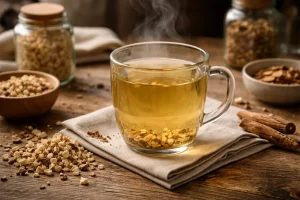
- Simmer for 5 to 8 minutes. The water will turn pale gold and smell spicy.
- Next, remove the pan from the heat and let it rest for 2 minutes.
- Strain into a mug through a fine mesh strainer.
- Finally, add 1 teaspoon of honey and a squeeze of lemon. Stir and taste.
If you prefer a milder cup, steep the cracked peppercorns in just-boiled water for 10 minutes instead of simmering. This gives a softer, more floral flavor.
Crushed vs Whole Peppercorns
The way you prepare the peppercorns changes the cup a lot. So it helps to understand the options.
- Whole, uncracked: very mild. Most of the oils stay locked inside, so you need a long simmer of 15 minutes or more.
- Lightly cracked: the best balance. The oils release steadily, and the tea stays clear and aromatic.
- Coarsely crushed: stronger and spicier. Use a little less pepper and a shorter simmer of about 5 minutes.
- Finely ground: strong and cloudy. Ground pepper can leave grit in the mug and taste harsh. Therefore, use only a small pinch if you go this route.
For most people, lightly cracked peppercorns give the most pleasant result. In addition, they are easy to strain out.
Best Pairings: Ginger, Honey, Lemon and More
Pepper is friendly with many flavors. Here are the classic partners and how to use them.
Ginger
Ginger adds a bright, zesty heat that complements pepper well. Add 1 teaspoon of dried organic cut and sifted ginger to the pan with the peppercorns. Then simmer together for 8 to 10 minutes. The two spices make a bold, warming base.
Honey and Lemon
Honey softens the pepper’s edge, while lemon brightens it. Add both after straining, because boiling honey changes its flavor. Start with 1 teaspoon of honey and a quarter of a lemon, then adjust to taste.
Cinnamon
Cinnamon brings natural sweetness and a cozy aroma. A small piece of organic true Ceylon cinnamon works especially well. Ceylon cinnamon tastes delicate and citrusy, so it does not overpower the pepper.
Cloves and Cardamom
These two spices turn your cup into a light chai. Add 2 organic whole cloves and 3 lightly crushed organic green cardamom pods. Cloves add depth, while cardamom adds a cool, floral lift. However, use cloves sparingly, since they can dominate quickly.
Golden Turmeric and Black Pepper Tea
The turmeric and pepper pairing is one of the most popular variations. It has deep roots in South Asian home cooking, where the two spices often appear together. Here is a simple version for two cups.
- First, add 2 cups of water to a saucepan.
- Stir in 1 teaspoon of ground turmeric and 1/4 teaspoon of lightly cracked black peppercorns.
- Add 1 teaspoon of dried ginger and a small piece of Ceylon cinnamon.
- Bring to a boil, then simmer gently for 10 minutes.
- Next, strain into two mugs.
- Stir in honey to taste and a splash of warm milk or oat milk if you like.
- Finally, sprinkle a pinch of cinnamon on top and serve warm.
Turmeric stains easily, so use a stainless steel pan and rinse your strainer right away. Also, stir before drinking, because turmeric tends to settle at the bottom.
More Variations to Try
Once you know the basic method, you can build many different cups. For example:
- Pepper chai: simmer pepper, ginger, cardamom, cloves and cinnamon for 10 minutes. Then add black tea for 3 minutes and finish with milk.
- Citrus pepper tea: add a strip of orange peel to the simmer. It pairs beautifully with the pepper’s own citrus notes.
- Iced pepper honey tea: brew a double strength cup, sweeten it while hot, then pour it over ice with lemon slices.
- Apple pepper tea: simmer pepper with a few apple slices and cinnamon for a cozy fall drink.
If you want ideas for other warming blends, take our quiz Which Cold Weather Tea Should You Brew? and find a cup that fits your taste.
Common Mistakes When Making Black Pepper Tea
This drink is simple, yet a few mistakes can ruin the cup. Here are the most common ones.
- Using too much pepper. More is not better. Start with 1/2 teaspoon per mug and increase slowly.
- Using stale ground pepper. Old pepper tastes flat and dusty. Instead, crack whole peppercorns just before brewing.
- Boiling the honey. Add honey after straining so it keeps its flavor.
- Skipping the strainer. Pepper pieces in your mouth are unpleasant. So always strain through a fine mesh.
- Simmering too long with cloves. Cloves turn bitter if they simmer for too long. Therefore, keep the simmer under 12 minutes.
How to Choose and Store Spices for Tea
Good tea starts with fresh spices. Choose whole peppercorns that look dark, even and well wrinkled. When you crack one, it should release a strong, fresh aroma. Likewise, cardamom pods should be green rather than faded, and cloves should feel oily when pressed.
Store all whole spices in airtight glass jars in a cool, dark cupboard. Keep them away from the stove and the sink, because heat and steam speed up flavor loss. Whole peppercorns keep their aroma for two to three years. Ginger and cinnamon pieces stay fresh for about one to two years. Also, label each jar with the purchase date so you know what to use first.
If you drink this tea often, you can premix a jar. For example, combine 4 tablespoons of peppercorns, 4 tablespoons of dried ginger, 2 tablespoons of cardamom pods and a few cinnamon pieces. Then use about 1 1/2 teaspoons of the mix per cup.
Water matters too. Filtered water gives a cleaner taste, because hard tap water can dull the spices. In addition, a small saucepan works better than a kettle, since you need to simmer the peppercorns rather than just pour hot water over them. Finally, a fine mesh strainer or a paper filter keeps tiny pepper fragments out of your mug.
Precautions
Black pepper is a common kitchen spice. Even so, strong spiced drinks are not for everyone. Large amounts of pepper may irritate a sensitive stomach. In addition, if you are pregnant, nursing or taking medications, talk with your healthcare provider before drinking concentrated spice teas regularly. Turmeric drinks deserve the same care.
Frequently Asked Questions
What does black pepper tea taste like?
It tastes warm, woody and slightly citrusy, with a gentle heat in the throat. With honey and lemon, it becomes smooth and comforting.
Can I use pre-ground pepper?
Yes, but use only a small pinch and strain through a very fine strainer. Whole peppercorns, however, give a cleaner and more aromatic cup.
Does black pepper tea have caffeine?
No. Plain pepper tea is caffeine free. However, it will contain caffeine if you add black or green tea leaves.
Can I reuse the peppercorns?
You can simmer them a second time, but the flavor will be weaker. So add a few fresh peppercorns to boost the second batch.
Can I make it ahead of time?
Yes. Brew a large batch, strain it and keep it in the fridge for up to three days. Then reheat gently and add honey and lemon before serving.
Black pepper tea is quick, affordable and endlessly flexible. Start with the basic recipe, then add ginger, cinnamon, cardamom or turmeric to build your favorite cup. Stock up on fresh organic whole spices from Hatton Naturals and brew a warming mug tonight.