Bilberry Tea: How to Brew Bilberry Leaf and Pair It
Bilberry tea is a gentle, slightly astringent herbal tea with deep roots in Northern European folk traditions. Most people know bilberry for its small, dark berries. However, the leaves have been dried for tea for generations, and they make a mild, pleasant cup. In this guide, you will learn what bilberry is, how it differs from blueberry, how to brew the leaf, and how to blend it with fruit. We also cover iced tea, storage and the traditional precautions worth knowing.
What Is Bilberry?
Bilberry is Vaccinium myrtillus, a low, shrubby plant in the heath family. It grows wild in the forests, heaths and mountain slopes of Northern and Central Europe. In addition, it is found across parts of northern Asia. The plant rarely grows taller than knee height. It has small, oval, bright green leaves with finely toothed edges, and it carries single blue black berries in late summer.
Bilberry has many regional names. In Finland and Sweden it is called mustikka and blåbär, and in the British Isles it is also known as whortleberry, blaeberry or huckleberry. As a result, labels can be confusing, so always look for the botanical name Vaccinium myrtillus.
Bilberry in Nordic folk tradition
Berry picking in the summer forest is a cherished custom in Scandinavia and Finland. Thanks to “everyman’s right,” anyone may pick wild berries in the countryside. Families gathered bilberries for pies, soups and preserves. Meanwhile, they dried the leaves for winter tea. Bilberry leaf has been used traditionally in Nordic and Central European folk practice as a household tea. Some traditions also linked it with digestion. These are historical customs, not promises, so enjoy the cup for its flavor and its story.
Bilberry vs Blueberry: What Is the Difference?
Bilberries and North American blueberries are close cousins in the same genus, yet they are not the same plant. Here is how they compare.
| Feature | Bilberry (Vaccinium myrtillus) | Cultivated blueberry (Vaccinium corymbosum) |
|---|---|---|
| Native range | Europe and northern Asia | North America |
| Plant size | Low shrub, under 2 feet | Bush, often 4 to 8 feet |
| Berry growth | Single berries or pairs | Clusters |
| Berry flesh | Dark purple all the way through | Pale green or white inside |
| Flavor | Tart, intense, slightly wild | Sweet, milder |
| Typical harvest | Mostly wild picked | Mostly farmed |
So, if you have ever bitten into a bilberry and stained your fingers and tongue purple, that is the difference. The color runs all the way through the fruit. The leaves also differ slightly, but both make a mild, green tea.
Leaf Tea vs Berry Tea
When people say “bilberry tea,” they may mean two very different drinks. First, there is leaf tea, made from the dried green leaves. Second, there is berry tea, made from dried fruit. Our bilberry leaf cut and sifted is the leaf form, so this guide focuses on leaf tea.
- Leaf tea: A pale gold to light green infusion. It has a mild, slightly woody flavor and a dry, astringent finish, a bit like a light green tea. It is caffeine free.
- Berry tea: A deep red purple infusion. It tastes fruity and tart, and it is made by simmering dried berries.
Because the leaf is mild, it is a great base for blends. In fact, many people add fruit, flowers or mint to bring in the color and brightness that berry tea has naturally.
How to Brew Bilberry Tea from the Leaf
Bilberry leaf contains tannins, which give it that dry, astringent finish. So, the main goal is to extract flavor without letting it turn harsh. These steps make a smooth, balanced cup.
- Heat 8 oz (240 ml) of fresh, filtered water to 195 to 205 F (90 to 96 C). Just off the boil is ideal.
- Measure 1 to 1 1/2 teaspoons of cut leaf, about 1 to 1.5 grams.
- Place the leaf in an infuser, teapot or French press.
- Pour the water over the leaf and cover the cup.
- Steep for 5 to 7 minutes. Shorter steeps are lighter. Longer steeps are drier and more astringent.
- Strain and taste. Then add honey or a slice of lemon if you like.
For a pot, use 1 1/2 tablespoons (about 5 grams) of leaf per quart (about 1 liter) of water and steep for 6 to 8 minutes. In addition, you can keep leftover tea in the refrigerator for up to 2 days.
Quick ratio guide
| Style | Leaf | Water | Temperature | Time |
|---|---|---|---|---|
| Light cup | 1 tsp | 8 oz | 195 F (90 C) | 5 min |
| Standard cup | 1 1/2 tsp | 8 oz | 205 F (96 C) | 6 to 7 min |
| Pot | 1 1/2 tbsp | 1 quart | 205 F (96 C) | 6 to 8 min |
| Cold brew | 1 tbsp | 16 oz | Cold | 8 to 12 hours |
What Does Bilberry Tea Taste Like?
Bilberry leaf tea is mild and gentle. It has soft green and woody notes, and some people notice a faint hint of berry or black tea. The finish is slightly dry, because of the tannins. That astringency is pleasant in a short steep. However, it becomes puckering if you steep too long or use too much leaf.
Because the flavor is quiet, bilberry leaf works like a canvas. For example, it softens tart hibiscus, it supports fruity rose hips, and it takes on the sweetness of blackberry leaf with ease.
Bilberry Tea Blends with Fruit and Herbs
Blending is where bilberry leaf really shines. The following combinations are tested and easy to remember. Use them per 8 oz cup, and steep for 5 to 7 minutes at 205 F (96 C).
- Forest berry blend: 1 tsp bilberry leaf + 1/2 tsp blackberry leaf cut and sifted. This makes a smooth, rounded cup with a gentle sweetness.
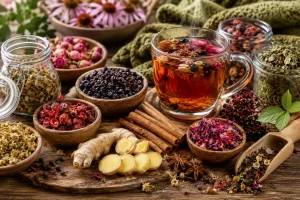
- Rosy fruit blend: 1 tsp bilberry leaf + 1 tsp rose hips cut and sifted. As a result, you get a fruity, tangy tea with a warm orange tint.
- Ruby blend: 1 tsp bilberry leaf + 1/2 tsp hibiscus cut and sifted. This gives a bright red, tart cup that looks like berry tea.
- Cool leaf blend: 1 tsp bilberry leaf + 1/2 tsp organic spearmint cut and sifted. It is fresh and clean, and it is great after meals.
- Nordic garden blend: 1 tsp bilberry leaf + 1/2 tsp blackberry leaf + 1/2 tsp rose hips + a pinch of hibiscus. It is layered, fruity and colorful.
Blackberry leaf and bilberry leaf are a classic European pairing. If you want to learn more about that partner, take our quiz, Is blackberry leaf the right herb for you, and see how it fits your tea routine.
Iced Bilberry Tea Recipe
This ruby colored iced tea is perfect for warm afternoons, picnics or a café menu. Hibiscus gives it color, rose hips add tang, and bilberry leaf ties it together.
Ingredients (makes about 1 quart)
- 1 1/2 tablespoons bilberry leaf
- 1 tablespoon rose hips
- 2 teaspoons hibiscus
- 4 cups water
- 2 to 3 tablespoons honey, or to taste
- Fresh mint sprigs and lemon slices, to serve
Method
- First, bring 2 cups of water to 205 F (96 C).
- Then add the bilberry leaf, rose hips and hibiscus to a heatproof pitcher.
- Pour the hot water over the herbs, cover and steep for 7 minutes.
- Next, strain the tea and stir in the honey while it is still warm, so it dissolves fully.
- Add the remaining 2 cups of cold water to cool the tea quickly.
- Refrigerate for at least 2 hours.
- Finally, serve over ice with mint sprigs and lemon slices.
Prefer a gentler flavor? Instead of hot brewing, combine all herbs with 4 cups of cold water and refrigerate for 10 to 12 hours. Cold brewing pulls out fewer tannins, so the result is softer and less astringent.
How to Choose and Store Bilberry Leaf
Quality bilberry leaf should be green to olive green, with small leaf pieces and few stems. It should smell clean, mildly green and a bit like hay. On the other hand, brown, crumbly leaf with little aroma has likely aged or been stored poorly.
Storage tips
- Use an airtight glass jar or an opaque, resealable pouch.
- Keep it in a cool, dark, dry place, away from the stove and sunny windows.
- Always scoop with a dry spoon.
- Keep blends in separate jars, because hibiscus and rose hips can absorb moisture faster than leaf.
- Write the opening date on the label.
Stored well, dried bilberry leaf keeps good flavor for about 1 to 2 years. For a full breakdown of how long different herbs stay fresh, read our guide to dried herbs shelf life.
Common Mistakes When Brewing
- Steeping too long. After 8 to 10 minutes, the tannins dominate and the cup turns harsh.
- Expecting a purple tea. Leaf tea is pale. So, add hibiscus if you want deep color.
- Using too much leaf. More leaf mostly adds dryness, not flavor.
- Mixing up the forms. Berry recipes and leaf recipes are not interchangeable, because the ratios and flavors differ.
Traditional Precautions
Bilberry leaf is a traditional tea, but it is meant for moderate, occasional use. In fact, traditional and modern herbal references discourage long term, heavy use of the leaf, because of its tannins and other compounds. In addition, people who take diabetes medications should talk to their doctor before drinking bilberry leaf tea regularly, since it may interact with those medications. Also, pregnant or breastfeeding women are usually advised to avoid the leaf. Finally, if you take any prescription medication or have a health condition, check with a healthcare professional before adding a new herbal tea to your routine.
Bilberry Tea FAQ
Does bilberry tea contain caffeine?
No. Bilberry leaf is naturally caffeine free, so you can enjoy it at any time of day.
Can I use blueberry leaves instead of bilberry leaves?
You can brew blueberry leaves, and the flavor is similar. However, they are a different species, so the taste and traditional background are not identical.
Why is my bilberry tea not purple?
The color comes from the berries, not the leaves. Leaf tea is pale gold or green, so add hibiscus or rose hips for a rosy color.
How many times can I steep bilberry leaf?
You can usually steep it twice. The second steep needs 7 to 8 minutes and tastes lighter, with less astringency.
What pairs best with bilberry leaf?
Blackberry leaf, rose hips, hibiscus and spearmint are all excellent partners. They add sweetness, tartness, color or freshness.
Brew Your First Pot of Bilberry Tea
Bilberry tea connects you to Nordic forest traditions with every cup. It is mild, caffeine free and easy to brew. First, start with 1 to 1 1/2 teaspoons of leaf per cup for 5 to 7 minutes. Then explore fruity blends and iced versions as you go. Ready to start? Stock up on organic bilberry leaf and its blending partners from Hatton Naturals. We supply both home tea lovers and businesses that want quality botanicals.