Alfalfa Tea: How to Brew This Mild, Grassy Herb
Alfalfa tea is a gentle, grassy herbal cup that tastes a lot like a very mild green tea, but without any caffeine. Most people know alfalfa as sprouts on a sandwich or as hay for horses. However, the dried leaves and stems make a pleasant, easy tea for everyday sipping. In this guide, you will learn where the plant comes from, how the herb differs from sprouts and seeds, and exactly how to brew it. We also share blends, an iced version, storage tips and traditional precautions.
What Is Alfalfa?
Alfalfa is Medicago sativa, a perennial plant in the pea and bean family. It has small, clover-like leaves arranged in groups of three, and purple or violet flowers. Its roots are famous for growing extremely deep, sometimes more than 15 feet. As a result, the plant can reach water and minerals far below the surface, which is one reason farmers value it so much.
Like other legumes, alfalfa works with soil bacteria to capture nitrogen from the air. So farmers often plant it in rotation to enrich their fields. The herb used for tea is the aerial part, meaning the leaves, stems and sometimes flowers, harvested before the plant goes to seed and then dried and cut. To learn more about what the leaf contains, read our guide to alfalfa herb nutrition and what it offers.
A Short History: From Forage to Folk Herb
Alfalfa is one of the oldest cultivated forage crops in the world. It most likely originated in the region around ancient Persia, in present-day Iran. Persian horsemen fed it to their animals, and then the plant traveled with armies and traders into Greece and Rome. The Arabic name is often translated as “father of all foods,” a phrase that later gave rise to the English word alfalfa.
Spanish settlers brought the plant to the Americas, and by the 1800s it had become a major crop in the western United States. Meanwhile, the leaf also found a place in folk practice. Alfalfa has been used traditionally in rural American, Ayurvedic and Chinese folk traditions as a spring tonic tea and a mild kitchen green. Early American herbalists often brewed it alongside nettle and dandelion. We share these uses as history and tradition only, not as health promises.
Alfalfa Herb vs Sprouts vs Seeds
The word alfalfa can refer to three different products, so it helps to know which one you are buying. Each has a different use in the kitchen.
| Form | What it is | Flavor | Best use |
|---|---|---|---|
| Dried herb (cut and sifted) | Dried leaves and stems of the mature plant | Grassy, hay-like, mild | Tea, infusions, herbal blends |
| Sprouts | Seeds germinated for 4 to 6 days | Fresh, crunchy, nutty | Salads, sandwiches, wraps |
| Seeds | Raw seeds of the plant | Slightly bitter, beany | Growing sprouts at home |
For tea, choose the dried herb. Seeds are meant for sprouting, not brewing, and traditional sources advise against eating large amounts of raw seeds. Our organic alfalfa cut and sifted is chopped into small, even pieces, so it is easy to measure and blends well with other leaves.
How to Brew Alfalfa Tea
Alfalfa is a leaf herb, so you brew it by infusion rather than by simmering. The process is simple, but a few details make a big difference. First, use fresh, cold water that you bring to a boil. Then let it cool for a minute so it does not scorch the leaves.
- Measure the herb. Use 1 to 2 teaspoons of dried alfalfa (about 1 to 2 grams) per 1 cup (8 oz or 240 ml) of water. Start with 1 teaspoon if you are new to it.
- Heat the water. Bring it to a boil, then let it rest for about 1 minute, until it reaches 195 to 205°F (90 to 96°C).
- Pour and cover. Pour the water over the herb in a mug, teapot or French press. Cover it, because a lid keeps the aromatic oils in the cup.
- Steep. Let it steep for 5 to 7 minutes for a light cup. For a stronger flavor, go up to 10 minutes.
- Strain. Use a fine mesh strainer, since the cut herb includes small leaf particles.
- Taste and adjust. Finally, add a little honey or lemon if you like.
For a pot of tea, use about 2 tablespoons of herb per quart of water. Also, if you want a richer, longer infusion, some people steep alfalfa for 4 hours or overnight at room temperature in a covered jar, then strain and refrigerate it. This long infusion is a traditional method for leafy herbs like nettle as well.
What Does Alfalfa Tea Taste Like?
Alfalfa tea tastes clean, grassy and slightly sweet, much like a mild green tea or freshly cut hay. It is not bitter when steeped correctly, and the color is a pale yellow green. Some people also notice a soft, vegetal note similar to the cooking water from fresh peas.
However, oversteeping can make it taste dull and slightly bitter. So if your cup tastes flat, shorten the steep time or use a little less herb. Because the flavor is gentle, alfalfa makes a wonderful base for blends. It softens stronger herbs and gives them a rounder, greener body.
Alfalfa Tea Blends to Try
Alfalfa pairs naturally with other leafy herbs, and it also works with bright, citrusy flavors. Here are some combinations to try. Each one uses the same infusion method and steep time, so you can mix the herbs in one teapot.
- Green garden blend: 1 teaspoon alfalfa and 1 teaspoon organic nettle leaf cut and sifted. Nettle is deeper and more spinach-like, so together they make a hearty green cup.
- Cool mint blend: 1 teaspoon alfalfa plus 1/2 teaspoon organic peppermint cut and sifted. The mint adds a fresh lift that many beginners love.
- Spring greens blend: 1 teaspoon alfalfa, 1/2 teaspoon nettle and 1/2 teaspoon organic dandelion leaf cut and sifted. Dandelion leaf brings a pleasant, slightly bitter edge, much like arugula.
- Citrus grass blend: 1 teaspoon alfalfa and 1 teaspoon organic lemongrass cut and sifted. This one tastes bright and lemony, and it is excellent iced.
When you create your own blend, start with alfalfa as half of the mix. Then add stronger herbs in small amounts, taste, and adjust next time. If you are just starting out with herbal teas, our what herbal tea should a beginner try quiz can point you to a few easy favorites.
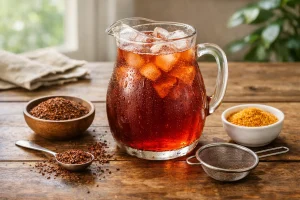
Iced Alfalfa Lemongrass Tea
Because the flavor is light and grassy, alfalfa makes a refreshing iced drink. There are two easy methods. The hot brew method is faster, while the cold brew method gives a smoother, sweeter result.
Hot Brew Method (makes 1 quart)
- First, combine 2 tablespoons alfalfa and 2 tablespoons lemongrass in a heatproof jar.
- Then pour 2 cups of water at about 200°F (93°C) over the herbs.
- Steep for 8 minutes, covered.
- Strain into a pitcher and add 2 cups of cold water.
- Finally, chill for at least 1 hour and serve over ice with a slice of lemon or a few mint leaves.
Cold Brew Method
Place the same amount of herbs in a quart jar and fill it with cold, filtered water. Cover and refrigerate for 8 to 12 hours. Then strain and serve over ice. Cold brewing extracts fewer bitter notes, so the tea tastes sweeter and softer. In addition, you can sweeten either version with a little honey dissolved in warm water before chilling.
How to Choose and Store Alfalfa
Good dried alfalfa should look green, not brown or gray. It should smell fresh and hay-like, and it should crumble easily between your fingers. If the herb smells musty or looks very dusty, it has likely been stored poorly or for too long. Also, look for certified organic alfalfa, because you will be steeping the whole leaf and stem.
Follow these storage tips to keep the flavor bright:
- Store the herb in an airtight container, such as a glass jar or a resealable pouch.
- Keep it away from light, heat and moisture. A dark pantry shelf works well.
- Avoid storing it above the stove or near the dishwasher, because steam and heat fade the color.
- Write the date on the jar. Dried alfalfa keeps its best flavor for about 1 year.
Brewed tea should be refrigerated in a covered pitcher and used within 2 to 3 days. If it starts to taste sour or cloudy, discard it.
Common Brewing Mistakes
- Using boiling water straight off the heat, which can flatten the grassy notes.
- Steeping for 20 minutes or more in hot water, so the cup turns bitter.
- Brewing seeds instead of the dried herb.
- Pairing alfalfa with very strong herbs in equal amounts, which hides its gentle flavor.
Traditional Precautions
Alfalfa is a common food plant, but there are a few traditional precautions to keep in mind. The leaf naturally contains vitamin K, so anyone taking blood thinners, such as warfarin, should talk to a healthcare professional before drinking alfalfa tea regularly. Steady vitamin K intake matters with those medications. In addition, traditional guidance suggests that people with autoimmune conditions, such as lupus, should avoid alfalfa or ask their doctor first. Pregnant or breastfeeding women should also check with their healthcare provider. Finally, if you take any prescription medication, ask your doctor or pharmacist before adding a new herb. This article is for culinary and educational purposes only.
FAQ About Alfalfa Tea
Does alfalfa tea have caffeine?
No. Alfalfa is an herbal tea, so it is naturally caffeine free and can be enjoyed at any time of day.
How much alfalfa should I use per cup?
Use 1 to 2 teaspoons of dried herb per 8 oz cup. Start with 1 teaspoon, then increase it if you want a stronger flavor.
Can I make alfalfa tea from sprouts?
Not really. Sprouts are best eaten fresh, while tea is made from the dried leaves and stems of the mature plant.
What herbs go well with alfalfa?
Nettle, peppermint, dandelion leaf and lemongrass all pair well. Also, a slice of lemon or a little honey brightens the cup.
Can I drink alfalfa tea iced?
Yes. Brew it hot and chill it, or cold brew it in the fridge for 8 to 12 hours for a smoother taste.
Brew Your First Cup of Alfalfa
Alfalfa is a humble plant with a long history, and it makes a calm, grassy cup that is easy to love. Start with a simple teaspoon of our organic alfalfa, then try it with nettle, peppermint or lemongrass to find your favorite blend. Whether you are stocking your own pantry or your store shelves, we offer alfalfa and its blending partners in retail and wholesale sizes.