Chaste Tree Berry: Traditional Uses and How to Prepare It
Chaste tree berry, also known as vitex, is one of the best known herbs in Western herbal tradition. The small, peppery fruits come from a shrub that grows around the Mediterranean. Herbalists have written about it since ancient Greece. This guide covers its history, flavor, preparation, buying tips and important safety notes.
In addition, you will find simple tea ratios, blending ideas and a few kitchen uses. So, whether you are a home tea maker or a small herbal brand, you can use the berries with confidence.
What Is Chaste Tree Berry?
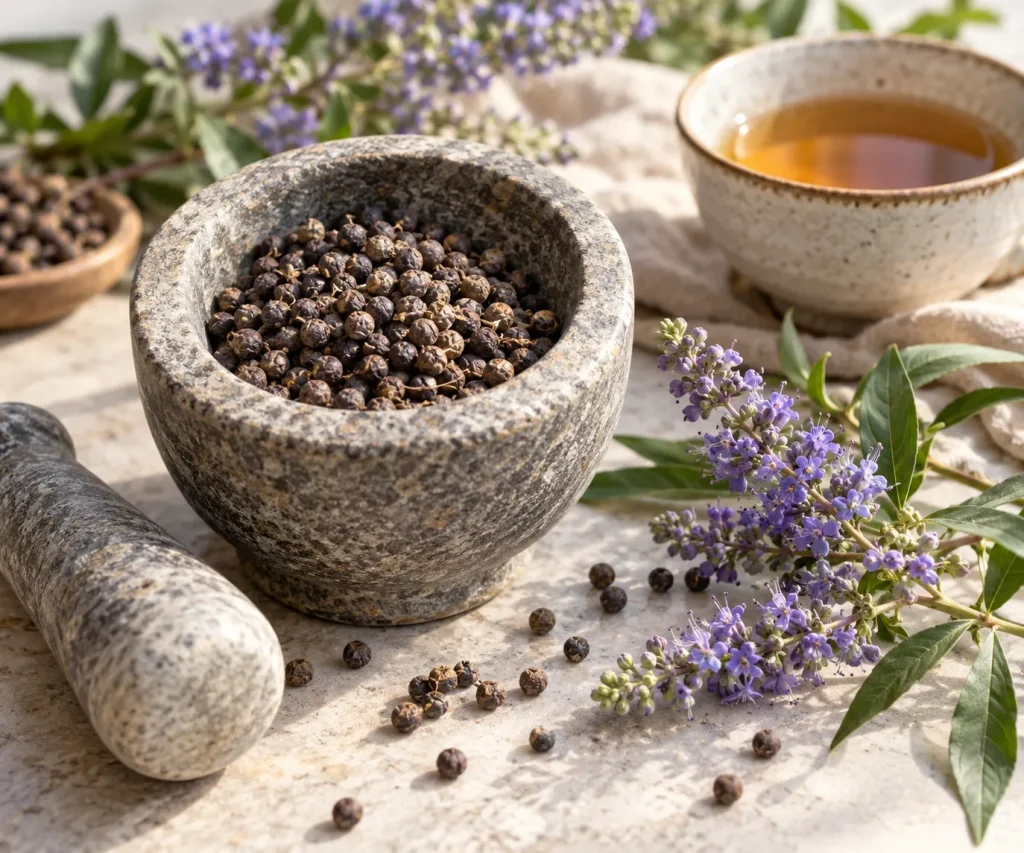
The chaste tree (Vitex agnus-castus) is a flowering shrub with lavender blossoms and finger shaped leaves. After flowering, it produces small dark berries about the size of a peppercorn. Once dried, these berries go into teas, tinctures and capsules.
The berries have a warm, peppery taste. In fact, medieval monasteries once used them as a pepper substitute. That practice gave the plant another common name: monk’s pepper.
The shrub belongs to the mint and verbena family, Lamiaceae. It loves sun, dry soil and warm summers. For this reason, it grows wild along riverbanks and coastal areas from southern Europe to Central Asia. Gardeners in warm parts of the United States also plant it for its long lasting purple flower spikes, which bees and butterflies enjoy.
Common Names Around the World
Because it has such a long history, the plant carries many names. Knowing them helps you read old herbals and product labels.
- Vitex: the short form of the botanical name, used by most modern herbalists.
- Monk’s pepper: a nod to its use as a spice in medieval monasteries.
- Agnus castus: the Latin species name, still common in European herbal books.
- Chasteberry: a simple English name you will see on many tea labels.
- Lilac chastetree: a garden name that refers to the purple flowers.
A Short History of Chaste Tree Berry
Historically, chaste tree berry has been closely linked with women’s herbal traditions. Greek and Roman writers mentioned it, and European herbalists continued to use it for centuries. Today, it remains a popular ingredient in herbal formulas made for women.
The Greek physician Dioscorides described the plant in the first century. Later, Pliny the Elder wrote about it too. In ancient Athens, women attending the festival of Thesmophoria reportedly slept on beds of its leaves. Then, during the Middle Ages, monks ground the berries over their food. As a result, the plant earned its reputation as a symbol of chastity, which explains its common name.
Meanwhile, the plant also had practical uses. People wove its flexible branches into baskets. In fact, the genus name Vitex likely comes from the Latin word for weaving.
Traditional Uses of Chaste Tree Berry
Folk herbalists in Europe traditionally brewed the berries as a simple tea or soaked them in alcohol. Many herbal traditions also combined vitex with other women’s herbs in tonic blends. However, traditional use is a story about the past, not a promise about results.
Researchers continue to study the herb. However, this article shares traditional background only and does not offer medical advice. If you want to learn about other herbs in this category, read our guide to herbs for hormonal balance.
Today, most people meet chaste tree berry in three forms: loose tea, liquid tinctures and capsule blends. Small supplement makers and herbal tea companies often build their formulas around the whole dried berry.
How to Prepare Chaste Tree Berry Tea
The berries are hard and round. Therefore, crushing them first helps the water reach the inner part of the fruit. Here is a basic method for one cup.
- Lightly crush 1 teaspoon of organic chaste tree berries with a mortar and pestle.
- Place the crushed berries in a mug or teapot.
- Pour 8 ounces of freshly boiled water over them.
- Cover and steep for 10 to 15 minutes.
- Strain the tea and sweeten it if you like.
The flavor is peppery and slightly bitter. For this reason, many people blend it with milder herbs. Organic raspberry leaf, lemon balm and spearmint all soften the taste.
Ratios and Steeping Guide
Use the table below as a starting point. Then adjust the strength to your own taste.
| Preparation | Berries | Water | Time |
|---|---|---|---|
| Single cup infusion | 1 tsp, crushed | 8 oz, just boiled | 10 to 15 minutes, covered |
| Teapot batch | 1 tablespoon, crushed | 24 oz, just boiled | 12 to 15 minutes, covered |
| Simmered decoction | 1 tsp, crushed | 12 oz, cold to start | Simmer 10 minutes |
| Iced tea | 2 tsp, crushed | 16 oz, just boiled | 15 minutes, then chill |
Always cover the cup while it steeps. Otherwise, the aromatic oils escape with the steam.
Blending Chaste Tree Berry With Other Herbs
On its own, the tea tastes sharp. So, most home blenders use vitex as one part of a larger mix. Here is an easy house blend you can make in a jar.
- Combine 1 part crushed chaste tree berries with 2 parts raspberry leaf.
- Add 1 part lemon balm for a soft lemon note.
- Add 1/2 part spearmint for a cool, clean finish.
- Shake the jar well so the berries spread evenly.
- Use 1 heaping teaspoon of the blend per 8 ounces of hot water and steep for 10 minutes.
For a warmer cup, add a thin slice of fresh ginger or a small piece of cinnamon. In addition, a teaspoon of honey rounds out the bitter edge nicely.
Not sure which spice character fits your kitchen best? Take our quick pepper variety quiz and compare monk’s pepper with the classics.
Other Ways to Use Chaste Tree Berry
Besides tea, herbal makers use chaste tree berry in tinctures and capsule blends. Whole berries also work in the kitchen. Grind a few in a pepper mill and sprinkle them over roasted vegetables for a mild, peppery flavor. Small brands and formulators often buy the berries in bulk for their own products.
Here are a few more practical ideas:
- Spice blends: mix ground berries with black pepper and sea salt for a gentle table seasoning.
- Infused vinegar: steep a tablespoon of whole berries in a cup of apple cider vinegar for two weeks, then strain.
- Homemade tincture: herbal makers often soak crushed berries in alcohol for four to six weeks before straining.
- Bulk formulas: wholesale buyers grind the berries fresh for capsules and tea bags.
Buying Chaste Tree Berries in Bulk
Herbal brands, tea shops and supplement makers often buy vitex by the pound. However, bulk buying works best with a plan. First, estimate how much you use in a typical month. Then order enough for three to six months, because whole berries hold their flavor well.
Next, think about grinding. Most formulators keep berries whole in storage and grind only what they need for each batch. As a result, the aroma stays bright from the first order to the last. Also, record the lot number of every bag you open, so you can trace each finished product back to its source.
Finally, ask for documentation before you buy. A reliable supplier should share certificates, origin details and organic status for every lot.
Chaste Tree Berry Compared With Black Pepper
Since monks used vitex as a pepper substitute, the comparison is natural. Black pepper is sharper and hotter, thanks to its piperine content. In contrast, chaste tree berry tastes softer, with a resinous, slightly sage like note. It also leaves a mild bitter finish that pepper lacks.
So, if you cook with it, use it as a gentle accent rather than a full replacement. For example, mix half black pepper and half ground vitex for a mellow table blend.
Safety Notes
Chaste tree berry is not a casual daily herb for everyone. Pregnant or breastfeeding women should avoid it. People who take hormonal medications, birth control or dopamine related drugs should also talk with a healthcare provider first. As with any herb, start with a small amount and pay attention to how you feel.
In addition, anyone with a hormone sensitive condition should get medical advice before use. Teenagers should also check with a doctor first. Finally, stop using the herb if you notice any unusual reaction.
How to Choose and Store it
Choose whole, dark berries with a fresh peppery aroma. Whole berries keep longer than ground ones, so grind them just before use. Store them in an airtight container away from light and moisture. Our dried herbs shelf life guide explains how long they last.
When you shop, look for these quality signs:
- A uniform dark brown to grayish color, with very little stem or dust.
- A clear, peppery smell when you crush a berry between your fingers.
- Certified organic sourcing and a clear lot number on the package.
- Dry, firm berries that do not stick together.
Common Mistakes to Avoid
First, many people skip crushing the berries, so the tea comes out weak. Second, some steep the tea uncovered and lose the aroma. Third, buying pre ground berries in large amounts often leads to flat flavor within months. Instead, buy whole berries and grind small batches as needed.
Frequently Asked Questions About Chaste Tree Berry
Is chaste tree berry the same as vitex?
Yes. Vitex is the short form of its botanical name, Vitex agnus-castus. Both names refer to the same plant.
What does chaste tree berry taste like?
It tastes warm and peppery with a slightly bitter finish, much like a mild black peppercorn.
Should I use whole or ground chaste tree berries?
Whole berries stay fresh longer. Crush or grind them right before you make tea for the best flavor.
How long do dried chaste tree berries last?
Whole berries usually keep good flavor for two to three years in an airtight jar. Ground berries, however, fade within about six months.
Can I grow my own chaste tree?
Yes, if you live in a warm climate with full sun. The shrub handles heat and dry soil well, and it usually berries by its second or third year.
Try Chaste Tree Berry in Your Next Blend
Chaste tree berry brings centuries of tradition and a unique peppery flavor to your tea shelf. Start with a simple cup, then explore blends with raspberry leaf, lemon balm and spearmint. Also, remember the safety notes before you begin.
Ready to get started? Shop our organic chaste tree berries in retail sizes or bulk. If you run a tea or supplement brand, ask us about wholesale pricing for larger orders.