Savory Herb: A Cook’s Guide to This Peppery Classic
The savory herb is one of the most underrated plants in the spice cabinet. It tastes peppery, a little piney and similar to thyme. European cooks have used it for centuries, especially with beans and lentils. This guide explains what savory is, how to cook with it and how to store it.
In addition, you will find a classic bean recipe, a homemade herb blend, cooking ratios and common mistakes. So by the end, this quiet herb may become one of your kitchen favorites.
What Is the Savory Herb?
Savory belongs to the mint family, like thyme, oregano and rosemary. There are two main types. Summer savory (Satureja hortensis) is an annual with a softer, sweeter flavor. Winter savory (Satureja montana) is a perennial with a stronger, more resinous bite. Both types share that signature peppery warmth.
In Germany, savory is called “Bohnenkraut,” which means “bean herb.” That name says a lot about its best use in the kitchen.
Savory is native to the Mediterranean and southern Europe. In fact, the ancient Romans grew it in their gardens and used it before black pepper became common. Later, monks spread it across Europe in monastery gardens. Then European settlers carried it to North America. Today, it is a staple in Germany, Bulgaria, Romania and Atlantic Canada.
The two types also differ in the garden. Summer savory grows about 12 to 18 inches tall, with soft, narrow leaves and tiny pale pink flowers. Winter savory stays lower and woodier, with glossy, tougher leaves. As a result, cooks often prefer summer savory for quick dishes and winter savory for long braises. In practice, most dried savory sold for cooking is summer savory, because its flavor is more balanced. So if a recipe simply says “savory,” summer savory is usually the safe choice.
What Does Savory Taste Like?
Savory tastes like a blend of thyme and black pepper, with a touch of mint. Its flavor is bold but not bitter. For this reason, a small amount goes a long way. Dried savory is more concentrated than fresh, so use about one third of the fresh amount.
Here is how savory compares with similar herbs:
| Herb | Flavor | Best uses |
|---|---|---|
| Summer savory | Peppery, sweet, gently herbal | Beans, eggs, vegetables, stuffing |
| Winter savory | Sharp, piney, resinous | Stews, game, slow cooked meats |
| Thyme | Earthy, floral, mild | Soups, roasts, sauces |
| Marjoram | Sweet, soft, slightly citrusy | Tomato dishes, sausages, dressings |
| Oregano | Bold, warm, a bit bitter | Pizza, Greek dishes, grilled meats |
How to Cook With the Savory Herb
- Beans and lentils: add a teaspoon of dried savory to a pot of white beans or lentil soup.
- Roasted vegetables: toss potatoes or carrots with olive oil, salt and a pinch of savory.
- Meat rubs: mix savory with garlic and pepper for chicken, pork or lamb.
- Stuffing: savory is a traditional ingredient in holiday stuffing, especially in Atlantic Canada.
- Herb blends: it is a common part of herbes de Provence.
Add dried savory early in the cooking process. That way, its oils have time to soften and blend into the dish.
Before adding the savory herb to a pot, crush the dried leaves between your palms. This simple step wakes up the aromatic oils. In addition, it breaks larger pieces into smaller flakes, so they spread evenly through the dish. For sauces and gravies, you can also tie the leaves in a small cheesecloth bundle. Then lift the bundle out before serving.
Use these simple ratios as a starting point. For a pot of beans or soup that serves four, add 1 to 2 teaspoons of dried savory. For a meat rub, use 1 teaspoon per pound of meat. For roasted vegetables, sprinkle about 1/2 teaspoon over a full sheet pan.
Savory also has a long cultural history. In Bulgaria, it is called “chubritsa” and appears on almost every table. Families mix it with salt and paprika into “sharena sol,” a colorful salt they sprinkle on bread. Meanwhile, in Newfoundland and Nova Scotia, summer savory flavors the classic Christmas dressing. Romanian cooks also add it to bean soups and pickles.
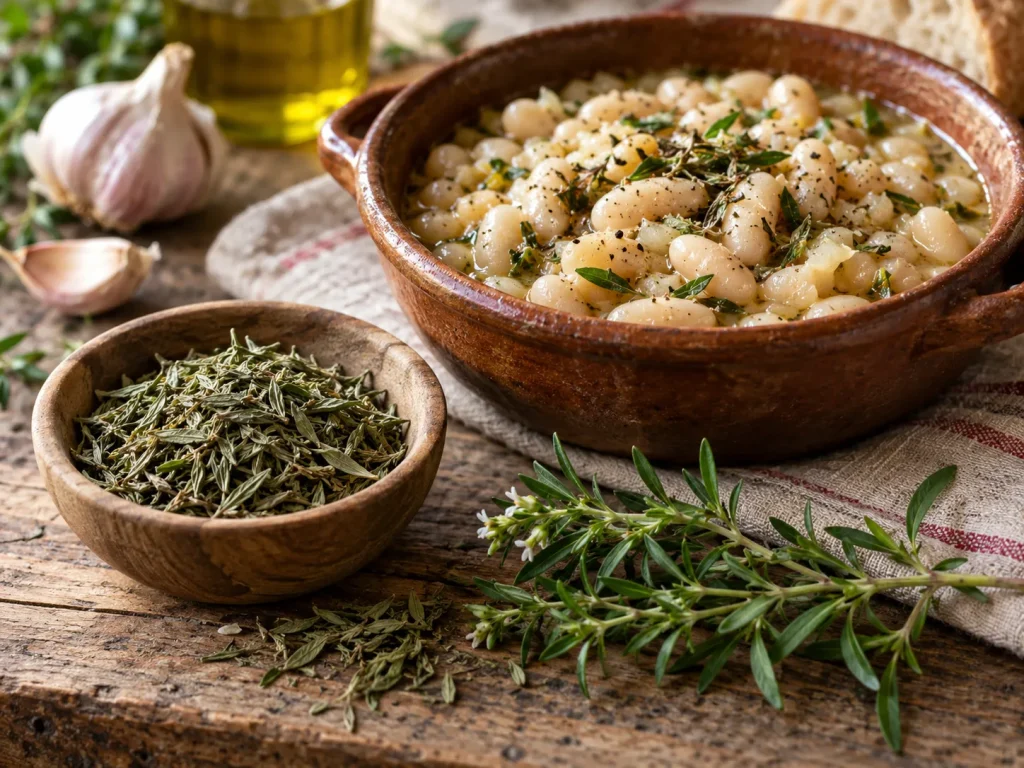
Classic Savory Herb Recipe: White Beans
This simple dish shows off the savory herb perfectly. It serves four as a side dish.
- Soak 1 cup of dried white beans overnight, then drain and rinse them.
- Add the beans to a pot with 4 cups of water, 1 bay leaf and 1 1/2 teaspoons of dried savory.
- Bring to a boil, then lower the heat and simmer for 60 to 75 minutes, until tender.
- Meanwhile, warm 3 tablespoons of olive oil in a pan and gently cook 2 sliced garlic cloves.
- Drain the beans, keeping a little of the cooking liquid.
- Toss the beans with the garlic oil, salt, black pepper and a small pinch of extra savory.
- Finish with a squeeze of lemon and serve warm.
For a quick savory salt, mix 2 tablespoons of sea salt with 1 tablespoon of dried savory and 1 teaspoon of sweet paprika. Then sprinkle it on buttered bread, eggs or roasted potatoes.
More Easy Ways to Use Savory
Savory roasted potatoes: Cut 2 pounds of potatoes into chunks. Toss them with 3 tablespoons of olive oil, 1 teaspoon of savory, salt and pepper. Then roast at 425 degrees Fahrenheit for 35 to 40 minutes, turning once.
Savory scrambled eggs: Whisk 4 eggs with a pinch of savory, salt and a splash of milk. Cook them slowly in butter over low heat. The herb gives the eggs a gentle, peppery lift.
Green bean saute: Blanch green beans for 3 minutes, then saute them in butter with garlic and 1/2 teaspoon of savory. In fact, savory and green beans are a classic German pairing.
Lentil soup: Add 1 teaspoon of savory with the onions, carrots and celery. Then simmer the soup as usual. As a result, the lentils taste deeper and more rounded.
Savory Herb Pairings
Savory works well with other Mediterranean herbs. Try it with organic thyme leaves, organic rosemary and organic marjoram. For extra warmth, add freshly ground black pepper. Our rosemary uses guide has more ideas for building herb blends.
To make a simple homemade herb blend, mix 2 tablespoons of savory, 2 tablespoons of thyme, 1 tablespoon of marjoram and 1 teaspoon of crushed rosemary. Store it in a small jar. Then use it on chicken, roasted roots or bean stews. Not sure which herb or spice to add next? Take our quick organic spice for your kitchen quiz.
Avoid a few common mistakes. First, do not use savory and oregano heavily together, because both are strong. Second, do not add dried savory only at the end, since it needs time to soften. Third, remember that winter savory is sharper, so use about half as much.
Can You Make Tea With Savory?
Yes. Savory makes a warm, thyme like herbal tea. Steep 1 teaspoon of dried leaves in hot water for 5 minutes, then add honey. In addition, it blends nicely with lemon peel. If you enjoy this style of brew, try our thyme tea recipe.
For a brighter cup, add a pinch of organic lemon peel to the savory before steeping. Folk herbalists in Europe traditionally brewed savory after rich meals. Today, most people enjoy it simply as a cozy, peppery cup. However, if you are pregnant, nursing or taking medication, ask your healthcare provider before drinking savory tea regularly.
How to Choose and Store the Savory Herb
Look for green leaves with a strong, peppery aroma. Faded gray leaves have lost much of their flavor. Our organic savory leaves, cut and sifted are ready for cooking and tea. Keep them in an airtight jar in a cool, dark cupboard. Stored this way, dried savory stays flavorful for about a year.
To test freshness, rub a pinch between your fingers. If the scent is sharp and peppery, the herb is ready to use. If it smells faint or dusty, it is time to restock. Also, avoid storing herbs above the stove, because heat and steam dull them quickly.
Savory is also easy to grow if you have a sunny spot. Summer savory grows fast from seed in spring. Winter savory, on the other hand, is a hardy little shrub that comes back each year. To dry either type, follow these steps:
- Cut the stems just before the plant flowers, when the aroma is strongest.
- Tie small bunches together with kitchen string.
- Hang them upside down in a warm, dark, airy room for 1 to 2 weeks.
- Strip the dry leaves from the stems and store them in a sealed jar.
Frequently Asked Questions About the Savory Herb
What is a good substitute for savory?
Thyme is the closest substitute. You can also mix thyme with a pinch of sage or marjoram to get closer to the flavor.
Is summer savory or winter savory better for cooking?
Summer savory is milder and more common in recipes. Winter savory is stronger, so use less of it in slow cooked dishes.
Is savory the same as savory flavor?
No. “Savory” as a flavor means salty or umami. The savory herb is a specific plant in the mint family.
Can I use savory instead of salt?
Partly. Its peppery taste adds depth, so you may need less salt. However, it does not replace salt completely.
Can I use fresh savory instead of dried?
Yes. Use about three times as much fresh savory. Also, add fresh leaves later in cooking to keep their bright flavor.
Does savory go well with fish?
Yes. A light pinch works with white fish and trout. Pair it with lemon and butter, and keep the amount small.
Bring the Savory Herb Into Your Kitchen
Savory is easy to use and rewarding to learn. First, add it to beans, soups and roasted vegetables. Then try it in rubs, stuffing and homemade herb blends. Finally, brew a warm cup when you want something cozy. Ready to cook? Order our organic savory leaves along with thyme and marjoram, and start with a pot of savory white beans this week.