Basil Tea: How to Make It With Dried Basil Leaves
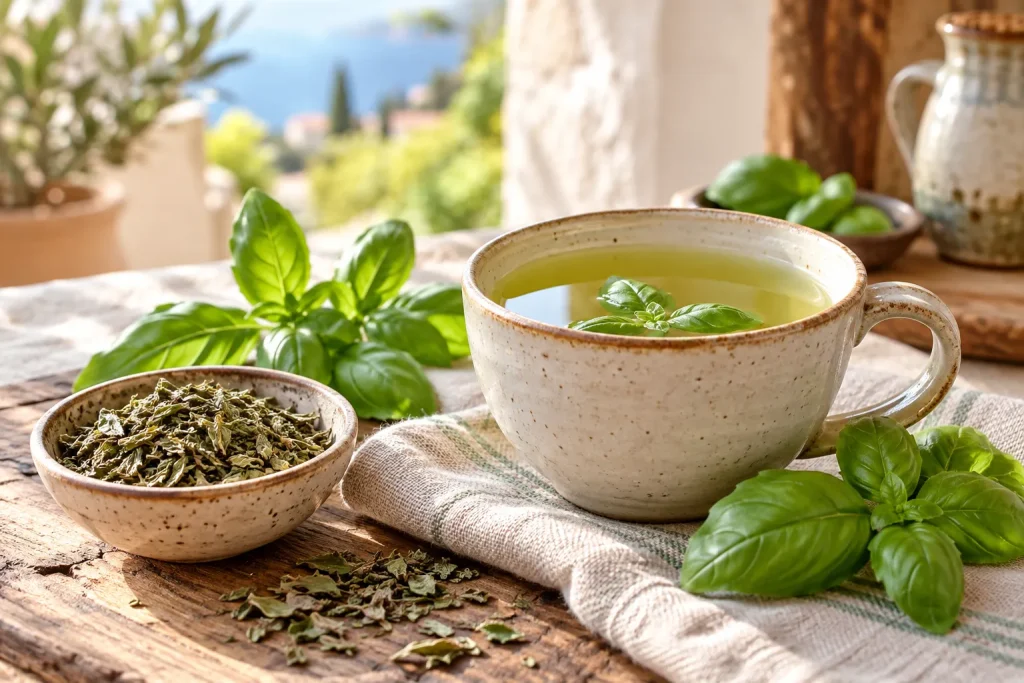
Basil tea is a fragrant, caffeine free brew with a sweet, peppery and slightly minty taste. Most people know basil from pasta sauce and pesto. Yet dried basil leaves also make a relaxing cup of herbal tea. This guide explains how to brew it and how it differs from tulsi, often called holy basil.
In addition, you will find brewing ratios, blends, iced tea ideas and tips for choosing good leaves. So by the end, you will know exactly how to turn a kitchen herb into a cup you look forward to.
What Does Basil Tea Taste Like?
Sweet basil (Ocimum basilicum) has a warm, clove like aroma with hints of anise. When you steep it, the flavor turns softer and rounder. The finish is clean and a little peppery. Because the taste is mild, basil pairs easily with citrus, mint and honey.
Dried leaves taste slightly different from fresh ones. For example, dried basil is earthier and more like hay, with a gentle sweetness. Fresh basil is greener and brighter. Both are good, so choose based on what you have and the mood you want.
Varieties for Tea
Sweet basil is the most common choice, but it is not the only one. In fact, there are dozens of basil types, and each one brings its own character to the cup:
- Genovese basil: the classic Italian type, sweet and clove like.
- Lemon basil: bright and citrusy, great for iced tea.
- Cinnamon basil: warm and spicy, lovely in fall blends.
- Thai basil: strong anise and licorice notes, best in small amounts.
Most dried basil sold for cooking is sweet or Genovese basil. So if you grow other types, try drying them for your own tea experiments.
Basil Tea vs Tulsi Tea
These two herbs are close relatives, but they are not the same plant. Tulsi (Ocimum tenuiflorum) comes from India and has a spicier, more clove forward flavor. Sweet basil is the Mediterranean kitchen herb. Both make lovely teas. If you enjoy basil tea, you may also like organic tulsi leaves, which have a bolder taste.
The quick comparison below shows how the two cups differ.
| Feature | Sweet basil | Tulsi (holy basil) |
|---|---|---|
| Botanical name | Ocimum basilicum | Ocimum tenuiflorum |
| Origin | Mediterranean kitchens, originally from tropical Asia | India |
| Flavor | Sweet, mild, peppery, slightly minty | Spicy, clove forward, bold |
| Main use | Cooking, light herbal tea | Herbal tea, Ayurvedic tradition |
| Steep time | 5 to 7 minutes | 5 to 10 minutes |
Curious which tulsi type suits you? Take our quick which tulsi variety should you brew quiz.
How to Make Basil Tea
- Measure 1 to 2 teaspoons of organic basil, cut and sifted per cup.
- Place the leaves in a tea infuser or teapot.
- Pour 8 ounces of water heated just off the boil over the leaves.
- Cover the cup and steep for 5 to 7 minutes.
- Strain the tea and add honey or a slice of lemon if you like.
Covering the cup matters. Basil is rich in volatile oils, and a lid keeps that aroma in your tea instead of in the air.
How much basil should you use? It depends on your taste and the form of the herb. Here is a quick guide for one 8 ounce cup:
- Mild cup: 1 teaspoon of dried basil, steeped for 5 minutes.
- Medium cup: 1 1/2 teaspoons of dried basil, steeped for 6 minutes.
- Strong cup: 2 teaspoons of dried basil, steeped for 7 minutes.
- Fresh leaves: 8 to 10 torn leaves, steeped for 5 to 7 minutes.
Start with the medium cup the first time. Then adjust the amount up or down on your next brew.
Water temperature also makes a difference. Aim for about 200 degrees Fahrenheit, which is water that has stopped bubbling for 30 seconds. A full rolling boil can make the leaves taste flat. Meanwhile, water that is too cool gives a weak, grassy cup.
Avoid these common basil tea mistakes:
- Steeping too long: after 10 minutes, the tea can turn bitter.
- Using too little herb: dried basil is light, so measure generously.
- Leaving the cup open: the aroma escapes and the flavor fades.
- Using old cooking basil: gray, dusty leaves give a dull cup.
Flavor Pairings for Basil Tea
- Lemon balm: organic lemon balm adds a gentle citrus note.
- Spearmint: organic spearmint makes the blend cool and fresh.
- Lemon peel: a pinch of organic lemon peel brightens the cup.
- Chamomile: whole chamomile flowers create a soft evening blend.
For iced basil tea, double the leaves and steep as usual. Then pour the tea over ice with a squeeze of lemon. Our herbal iced tea recipes include more ideas.
Easy Blends to Try
Blending is where basil tea really gets fun. Start with these ratios, then adjust them to your taste. Each recipe makes one 8 ounce cup.
Lemon basil cooler: Mix 1 teaspoon of basil, 1 teaspoon of lemon balm and a pinch of lemon peel. Steep for 6 minutes, then chill and serve over ice. As a result, you get a bright summer drink with no sugar needed.
Basil mint refresher: Combine 1 teaspoon of basil with 1/2 teaspoon of spearmint. Steep for 5 minutes. This blend is cool, clean and perfect after a heavy lunch.
Evening basil and chamomile: Use 1 teaspoon of basil and 1 teaspoon of chamomile. Steep for 7 minutes, covered. Then add a small spoon of honey for a soft bedtime cup.
For a larger batch, multiply the ratios by four and use a quart jar. Then strain and keep the tea in the fridge for up to two days.
Basil lemonade: Steep 2 tablespoons of dried basil in 2 cups of hot water for 7 minutes. Then strain and stir in 1/3 cup of honey while the tea is warm. Add 1/2 cup of fresh lemon juice and 2 cups of cold water. Finally, serve over ice with lemon slices. This is a crowd pleaser at summer cookouts.
Basil and berry iced tea: Brew a double strength cup of basil tea and let it cool. Then muddle a few fresh strawberries in a glass, add ice and pour the tea over them. As a result, the berries tint the drink pink and add natural sweetness.
Traditional Uses of Basil
Basil has a long history in Mediterranean and Asian kitchens. In many homes, a warm cup of basil infusion was a simple after dinner drink. Today, people mostly enjoy basil tea for its flavor and calming ritual. It is also a nice way to use dried basil that has lost some of its punch for cooking.
The herb also carries rich cultural meaning. In Italy, a pot of basil on the windowsill was once a sign of welcome and love. Meanwhile, in parts of Greece, basil was traditionally shared at religious feasts. In Southeast Asia, related basil types flavor drinks and desserts, and the seeds are soaked into sweet beverages. So a cup of basil tea connects you with many old kitchen traditions.
The name itself has an interesting story. The word basil comes from the Greek “basilikon,” which means royal. Some historians think the herb was once grown for royal households. Others link the name to the fragrant oils used by ancient kings. Either way, the plant has been prized in gardens and kitchens for well over two thousand years.
A short safety note: basil tea is a gentle kitchen herb drink for most adults when enjoyed in normal amounts. However, if you are pregnant, nursing or taking medication, such as blood thinners, ask your healthcare provider before drinking it often.
How to Choose and Store Dried Basil
Good basil tea starts with good leaves. Look for dried basil that is deep green, not brown or gray. It should smell sweet and spicy as soon as you open the bag. In addition, cut and sifted leaves are ideal for tea, since they steep evenly and strain easily.
Store dried basil in an airtight glass jar, away from sunlight, heat and steam. For example, do not keep it right above the stove. Also, use a dry spoon every time, because moisture ruins dried herbs fast. Stored well, the leaves keep their aroma for about a year.
If you grow basil at home, you can also dry your own leaves for tea. Here is a simple method:
- Harvest the leaves in the morning, before the plant flowers.
- Rinse them gently and pat them completely dry.
- Spread the leaves on a screen or tray in a warm, shaded, airy spot.
- Turn them once a day for 5 to 7 days, until they crumble easily.
- Store the dry leaves whole in a jar, then crush them just before brewing.
Homegrown basil is a fun project. However, a good organic supplier saves time and gives you steady flavor all year.
Frequently Asked Questions About Basil Tea
Can I use fresh basil for basil tea?
Yes. Use about 8 to 10 fresh leaves per cup and tear them before steeping. Fresh leaves give a greener, lighter taste.
Is basil tea caffeine free?
Yes. Basil tea contains no caffeine, so you can drink it any time of day.
How long does dried basil stay fresh?
Dried basil keeps good flavor for about one year in an airtight jar. See our dried herbs shelf life guide for tips.
Can I mix basil with green or black tea?
Yes. Add a pinch of basil to green tea for a fresh, herbal twist. Steep at the lower temperature that green tea needs.
Can I cold brew basil tea?
Yes. Add 2 tablespoons of dried basil to a quart of cold water. Then refrigerate it for 8 to 12 hours and strain.
Make Your Own Basil Tea Today
Basil tea is simple, affordable and full of flavor. First, choose fragrant organic leaves. Then steep them covered with hot water and add lemon, mint or honey. Finally, explore blends for every season. Ready to start? Order our organic basil and a few blending herbs, and brew your first cup today.